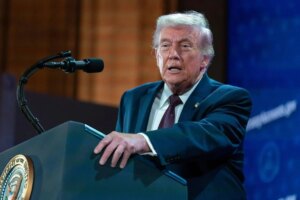
Amid continuing Pakistani efforts to bring views closer between Washington and Tehran in order to end the war, the Emir of Qatar, Sheikh Tamim bin Hamad Al Thani, discussed with US President Donald Trump, regional and international efforts aimed at stabilizing the calm and reducing escalation, most notably supporting diplomatic moves led by Pakistan to spare the region further tension and protect international peace and security.
According to a statement issued by the Qatari Emiri Diwan, the phone call addressed the importance of continuing dialogue paths to address current issues, in addition to ensuring the security of maritime navigation and the safety of strategic corridors, and maintaining the smooth flow of global supply and energy chains.
The Emir of Qatar affirmed Doha’s position calling for giving priority to peaceful solutions and supporting initiatives aimed at containing the crisis through dialogue and diplomacy, in a way that enhances stability and serves the interests of the peoples of the region and the world.
In parallel, Pakistani Army Commander Asim Munir continues his movements in Tehran, where he held a series of meetings with senior Iranian officials, including Foreign Minister Abbas Araghchi, Iranian President Masoud Pezeshkian, and Parliament Speaker Muhammad Baqir Qalibaf, in the presence of Araghchi, to discuss ways to achieve peace and remove obstacles to any possible settlement.
Munir is also expected to meet with the Commander of the Revolutionary Guard, Ahmed Wahidi, as part of Pakistani efforts aimed at breaking the stalemate between Tehran and Washington, according to what a senior source told Al Arabiya/Al Hadath.
On the other hand, fundamental differences still exist between the two parties, as Tehran insists on not transferring highly enriched uranium abroad, and demands to maintain its control and management of the Strait of Hormuz even after the end of the war, in addition to the lifting of US sanctions and the release of frozen Iranian funds.
As for Washington, it continues to refuse to keep enriched uranium inside Iran, and also refuses to impose any restrictions on navigation in the Strait of Hormuz, which is considered one of the most vital corridors for transporting oil and gas in the world.