In an escalation that reflects the fragility of the truce in the region, Iranian strikes have returned to the depths of the Gulf, targeting vital installations in the UAE, which opens the door to a scenario of a rapid military response that may expand the scope of the confrontation.
For the first time since the ceasefire, Iran launched 4 cruise missiles towards the UAE, in a first wave, which was followed by the activation of air defense systems again. The attack resulted in 3 Indian workers being moderately injured inside an oil facility in Fujairah, where a fire broke out at the site.
An Emirati source told CNN that expectations indicate an American-Israeli response within 24 hours, while the Israeli army has been placed on alert, without changing the instructions on the home front.
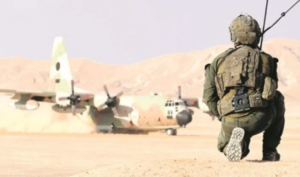
A CNN report also stated that an Israeli air defense system deployed in the UAE was the one that intercepted the Iranian missiles, noting that Israel “quietly deployed” the “Iron Dome” system with its crew in the Gulf country during the war.
On the ground, residents of the Emirates received warnings this afternoon (Monday) of a possible missile launch by the Iranian Revolutionary Guard, before the Ministry of Interior announced about 15 minutes later that “the threat has ended and the situation is currently safe.” But developments followed later, as the air defense systems were activated at approximately 18:00 Israeli time, then the sirens returned to sound an hour later, and were repeated again at approximately 20:40.
The UAE later announced that 4 Iranian cruise missiles were launched towards it, 3 of which were intercepted over territorial waters, while the fourth fell into the sea. It was also reported that a fire broke out at an oil facility in Fujairah as a result of an attack by Iranian drones, at a time when the UAE Ministry of Defense spoke of additional objections in various areas. As a result of these developments, the price of Brent oil jumped from $110 to $114 per barrel within one hour.
On the other hand, the UAE Ministry of Foreign Affairs condemned “the treacherous and renewed Iranian aggression via missiles and drones,” stressing that it “reserves the full and legitimate right to respond to these attacks.”
For its part, Tasnim Agency quoted a military source warning that if the UAE turns into a “toy in the hands of Israel” and takes an “unwise” step, Iran “will target all of the UAE’s interests and deal with them as part of the Zionist regime.” He added: “If the UAE takes an unwise step, all of its interests will become targets for Iran, and no part of its facilities will be safe.”
In a related context, the UAE had previously accused Iran of attacking a crude oil tanker belonging to the government oil company in Abu Dhabi using drones as it was crossing the Strait of Hormuz, while the commander of the US Central Command announced that 6 Iranian boats were sunk after they attempted to target navigation.
Trump also wrote in a post on the
According to the Marine Logistics Unit at the State Oil Company, the tanker “Baraka” was empty when it was attacked by two drones, and no casualties were recorded, while the US Central Command confirmed that no ships carrying the American flag were damaged.
In a previous statement, the UAE Ministry of Foreign Affairs called for an end to the escalation, demanding that Iran “stop these unjustified attacks, ensure its full commitment to an immediate cessation of all hostilities, and allow the Strait of Hormuz to be reopened completely and without conditions.”
The latest developments come in light of unprecedented tension, as Iran has been actively disrupting shipping traffic in the Gulf since the start of the American and Israeli strikes on its territory on February 18, threatening to target any “unauthorized” ships that cross the strait through which about 20% of global oil and gas supplies pass.