In a remarkable escalation in military rhetoric, Iran has raised the level of its threats related to the Strait of Hormuz, confirming its adherence to full control over this vital corridor, and sending direct messages to the United States and countries concerned with the security of navigation in the Gulf.
The Iranian Revolutionary Guard announced that the Strait of Hormuz “will remain forever under Iran’s administration,” noting the need for ships to pay transit fees, according to what was reported by Mehr Agency. He added that Tehran “will not allow even one liter of oil to pass in the absence of political will,” warning that “the end of the American presence in the Gulf will be heard from within the strait.”
In the same context, Major General Talaei Nik, Assistant for Administrative Development and Strategic Planning at the Iranian Ministry of Defense, confirmed that the transit of ships after the end of the war will be subject to Iranian protocols, stressing that facilitating navigation will remain conditional on not threatening his country’s security.
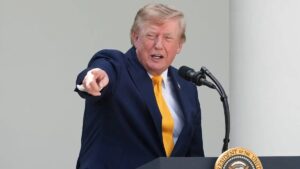
Talai’s statements came during a meeting of defense ministers of the Shanghai Cooperation Organization countries, where he strongly criticized American policies, describing Washington as “mindless and afflicted with arrogance,” in reference to the positions of US President Donald Trump.
He also warned that the continuation of this approach may push the world into a “dangerous and uncontrollable situation,” noting that military bases in neighboring countries that are used against Iran may become “legitimate targets” for Iranian forces.
These statements come in light of escalating tension in the Gulf region, where the Strait of Hormuz represents a sensitive point in the regional and global security equation, amid fears of the impact of any escalation on global energy supplies.
The Strait of Hormuz is one of the most important sea lanes in the world, through which a large proportion of global oil exports pass, making it a constant focus of tension between Iran and the United States and its allies. In recent years, the region has witnessed repeated incidents, from targeting tankers to seizing ships, in light of the escalation of the regional conflict.
Tehran uses this strait as a strategic pressure card, through which it links the security of navigation with its political and military interests, while international powers seek to guarantee freedom of transit through it, which places the region in a constant circle of attraction.
In light of this reality, any developments in the Strait of Hormuz will have a direct impact on the global economy, which makes the recent Iranian statements the focus of wide international attention, amid anticipation of the course of tension in the next stage.