Iranian Foreign Ministry spokesman, Ismail Baghaei, called for the United States and Israel to be held accountable for the assassination of Iranian officials, stressing that these actions represent a flagrant violation of international law.
Baghaei told Sputnik, saying: “The entire international community, not just Iran, requires accountability,” adding that what the United States and Israel committed is “a crime against international peace and security, a war crime, and a crime against humanity.”
He pointed out that Common Article 1 of the Geneva Conventions of 1949 obligates all states to respect international humanitarian law and work to implement it, stressing that these violations require international action to hold those responsible for them accountable.
He also stressed that all UN member states must strive to hold the United States and Israel accountable, given what he described as “atrocities” that flagrantly violate the basic principles of international law.
This position comes in light of the escalation of mutual tensions, following the strikes carried out by the United States and Israel last February 28 on targets inside Iran, including the capital, Tehran, which led to losses and damage, while Tehran responded by targeting Israeli sites and American military installations in the Middle East region.
The events witnessed the killing of Iranian Supreme Leader Ali Khamenei on the first day of the operation, and Iran declared an official mourning that lasted 40 days.
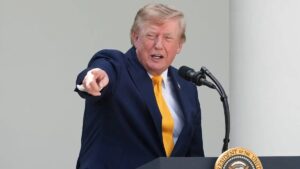
In a related development, Iran and the United States held talks in Islamabad on April 11, after US President Donald Trump announced a temporary truce for two weeks. However, these negotiations failed and did not result in any agreement, according to what Vice President J.D. Vance announced, and the American delegation returned to Washington without reaching any result.
It is noteworthy that this escalation comes in the wake of the strikes launched by the United States and Israel last February 28 on targets inside Iran, including the capital, Tehran, which resulted in damage and injuries. In return, Tehran responded by targeting Israeli sites and American military installations in the Middle East, which plunged the region into a spiral of constant tension.
These developments also witnessed a decisive turning point with the killing of Iranian Supreme Leader Ali Khamenei on the first day of the operation, which prompted Iran to declare a general mourning that lasted 40 days, which intensified political and military tensions.
In parallel, diplomatic tracks were active, as Iran and the United States held talks in Islamabad on April 11, after US President Donald Trump announced a temporary truce for two weeks, but these negotiations did not succeed, according to what Vice President J.D. Vance confirmed.
The failure of these talks shows the continuing complications between the two parties, in light of the overlapping of military confrontations with efforts to calm the situation, which leaves the region open to scenarios between escalation and negotiation.