In a notable diplomatic move, Amir Saeed Irani, Iran’s permanent ambassador to the United Nations, made direct accusations against five regional countries, demanding financial compensation from them for what he considered their participation in the war launched by the United States and Israel against Tehran.
In an official letter addressed to Antonio Guterres, Irwani called on Bahrain, Saudi Arabia, Qatar, the UAE, and Jordan to assume their responsibilities, considering that these countries have effectively contributed to the military escalation, which requires them to be held legally accountable and to pay appropriate compensation.
He stressed that the naval blockade imposed by Washington represents a “flagrant violation of Iran’s sovereignty and territorial integrity,” and represents a clear violation of international laws and agreements, especially those related to freedom of navigation and the sovereignty of states.
He stressed that the United States bears “full responsibility” for this action, and for all the negative effects that may result on regional and international peace and security, in a clear indication of the danger of expanding confrontation in the region.
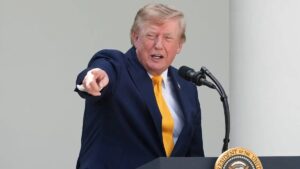
On the other hand, Donald Trump had stated that Iran was “desperately seeking to conclude a deal,” noting that Washington had received communications from “concerned parties,” and stressing that his country would not allow any party to “blackmail the world” through the Strait of Hormuz, despite his assertion that the United States did not fully depend on it.
These developments come in the context of an unprecedented escalation in tension between the United States and Iran, as the confrontation has transformed from a political framework into concrete practical measures aimed at exerting pressure, most notably the naval blockade imposed by Washington on the movement of ships linked to Iran.
This blockade is considered a decisive turning point in the course of the crisis, as it places the waterways, especially the Strait of Hormuz, at the heart of the geopolitical conflict, due to its strategic importance in transporting oil and global trade, which increases international fears of any possible disruption to shipping traffic.
At the same time, the round of negotiations held in Islamabad failed to achieve any progress, after Washington adhered to conditions that Tehran described as “excessive and illogical,” which led to the collapse of the negotiating track, despite the initiatives presented by the Iranian side.
In this context, Iran’s message to the United Nations reflects a serious attempt to transfer the confrontation to the legal and international framework, by holding Washington and its allies responsible for the escalation, and seeking to mobilize international support for its position, in the face of continued American pressure.
The statements exchanged between Tehran and Washington also reveal a stark contradiction in political discourse. While Iran confirms its rejection of the American conditions, Trump continues to talk about an Iranian desire to reach an agreement, which reflects a deep gap in assessments and positions.
With the continued military and economic escalation, and the absence of any clear hope of resuming negotiations, the region appears to be facing a stage open to multiple possibilities, ranging from gradually containing the crisis or sliding towards a broader confrontation.