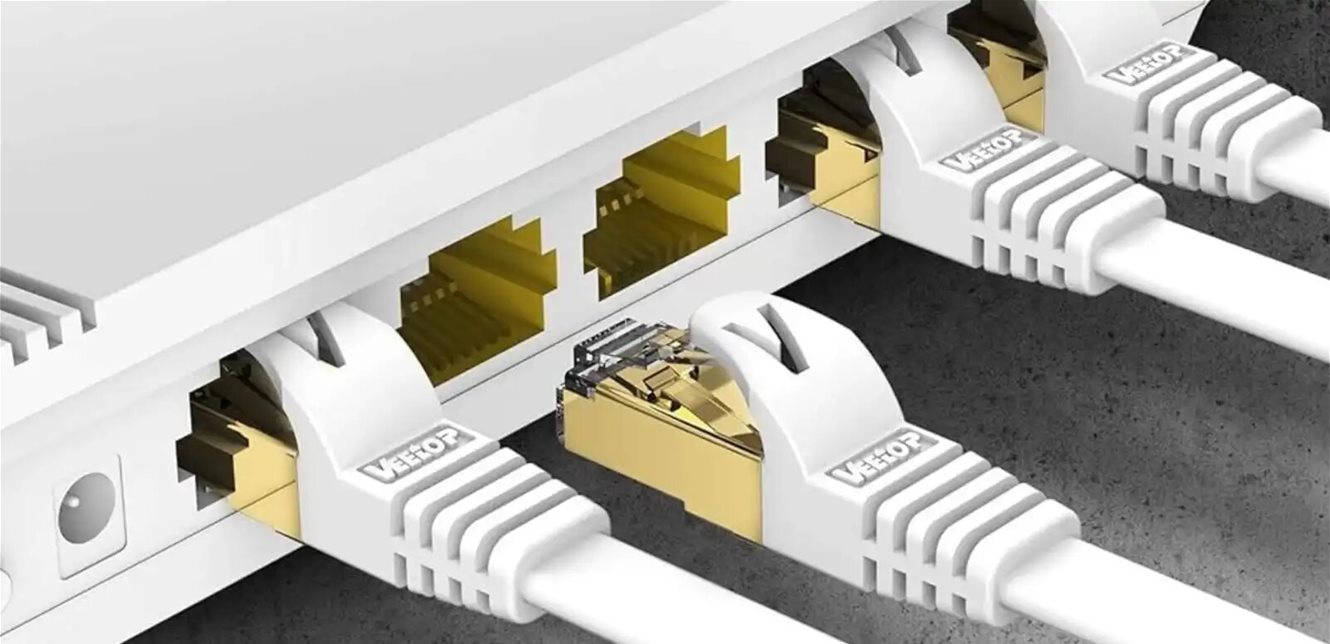
Technology specialists have warned against using flat-designed Ethernet cables, pointing out that most of them do not reach the level of efficiency of traditional round cables, which negatively affects the quality of data transfer in home and office networks.
Experts explained that the flat design of these cables, despite the neatness, ease of use and aesthetic appearance it provides, is often the reason for poor signal stability compared to traditional cables with a twisted structure, which protects data from electromagnetic interference.
This is because the internal wires in flat cables are often not properly coiled, which increases their exposure to electromagnetic interference and signal distortion.
While in regular round Ethernet network cables, the pairs of wires are wrapped around each other to reduce crosstalk and interference, by reducing the external electromagnetic field, thus improving the quality of communication.
According to experts, the flat design often means that the internal wires run parallel without proper twisting. This shape may cause the wires to act as small antennas that pick up interference from nearby electrical devices or power lines, resulting in poor stability and decreased performance, especially in networks with long distances or high speeds.
In contrast, traditional round cables always contain twisted pairs designed with standard specifications, such as: CAT5e or CAT6, which makes them better at stabilizing the signal and reducing errors.
Flat cables remain a practical option in limited situations, such as running under carpets or along walls, especially over very short distances, where interference and signal loss have less impact on performance.
Experts advise shoppers to choose high-quality, industry-standard Ethernet cables such as CAT5e or CAT6, avoid cheap flat cables that do not show any clear rating standards on the packaging, and prefer round cables in networking settings that require higher speeds and greater stability.
Experts emphasized that the external design does not reflect the quality of performance, and that purchasing flat Ethernet cables just because they look elegant or flexible may lead to communication problems in the long run.
The best choice for performance-minded consumers is to choose twisted cables designed to strict technical standards. (Erm News)