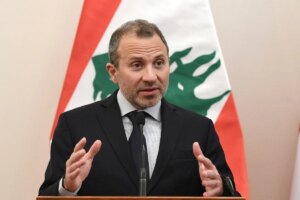
It is true that Samir Geagea stressed that commemorating the martyrs of the “Lebanese Resistance” this year acquires special importance, as it coincides with the fiftieth anniversary of the official founding of the “Lebanese Forces” in September 1976, stressing that recalling the past cannot remain mere nostalgia, but must turn into a responsibility towards the future.
Geagea said that the “Lebanese Forces” were not created to remain a prisoner of the past or merely nostalgia for it, but rather to build and defend a future worthy of the people of Lebanon, considering that its history “is not a museum, but rather trustworthiness, authorization, and action.”
He pointed out that the anniversary commemorates the 50th anniversary of the convergence of several resistance parties and groups under one leadership and one flag, at a time when Lebanon was, in his words, facing an “imminent existential threat,” describing these decades as 50 years of sacrifice, perseverance, resistance, persecution, arrest, and confrontation, and at the same time 50 years of faith, giving, and loyalty.
Geagea cited the second letter to the Corinthians: “Distress is severe on us from every side and we are not crushed. We are confused about our situation and do not despair. People persecute us and God does not abandon us. We fall in the struggle and do not perish.”
He recalled the leaders, the fighters, the wounded, the disabled, the missing, the displaced, the parents, and the children, in addition to those he described as “ordinary people who achieved exceptional heroism,” stressing that the martyrs are not just numbers, pictures, or names engraved in stone, but lives that were not lived, families that were torn apart, and the future of thousands presented “so that we may live and Lebanon will not disappear.”
He stopped at the name of Bashir Gemayel, describing him as the founder who “saw beyond the horizon,” and said that he was martyred, leaving a great legacy, unforgettable stances, and a vision for a strong republic that they “aborted in the cradle,” considering that the “Forces” are on the path to achieving it today.
Geagea stressed that the flame of the cause and hope has not been extinguished, whether among those who carried the cause for a short period or for many years, until the “last breath,” on the battlefields or fields of struggle.
He addressed the families of the martyrs, including mothers, fathers, wives, husbands, sons, daughters, and siblings, saying that the martyrs did not fall so that Lebanon would remain a country struggling to survive from one crisis to another, but rather “so that Lebanon might live free, sovereign, pluralistic, secure, and worthy of its children,” stressing that the mission is not over yet and that the confrontation will continue until this goal is achieved.
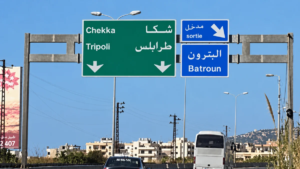
Geagea touched on 3 files that he said were directly related to the martyrs, the first of which was the death of Charbel Nahra, a vanguard leader in the Patriarch Elias Howayek-Batroun Regiment in the “Freedom Scouts,” who was not yet 17 years old. He said that Nohra died in a painful accident during preparations for the celebration, after he was trying to catch the bus that was taking him and his companions to Maarab to complete the required preparations.
As for the second file, it dealt with the assassination of Ramzi Irani, accusing the pillars of what he described as “the former Lebanese-Syrian security regime” of trying to hide the truth of his assassination for a long time. He said that a witness “from his family” finally narrated details that he considered to confirm that the former security regime was behind the crime.
Speaking about the case, Geagea added that “the worst criminals” in the assassination, as he put it, were the ones who insisted on misleading the investigation from the first moment, despite his presence at the time in a position of security and then political responsibility. He accused him of trying to charge others, considering that the recent confessions showed that he was, at a minimum, aware of the real perpetrator, if not an accomplice or partner in the crime, according to what he said.
As for the third file, it dealt with the assassination of the former “Forces” coordinator in the Jbeil region, Pascal Suleiman, and he said that the indictment decision that was issued after a long wait confirmed, in his words, that what happened was “a premeditated and determined killing and not just an accident.”
He stressed that the “Forces” will complete the required judicial procedures, especially with regard to the recovery of the wanted fugitives in Syria, considering that their recovery would lead to revealing the complete truth, especially the party actually behind the assassination. He added: “A right that has demands behind it never dies, so what if there are rights behind demanding, struggling believers who could never support me one day?”
Geagea moved to the general situation in the country, considering that Lebanon is experiencing a “very difficult and tragic situation in some of its aspects,” in light of the presence of hundreds of thousands of displaced people and devastation and destruction that he described as unprecedented even compared to the darkest stages that Lebanon went through, in addition to a faltering economy, an unclear horizon, and human losses exceeding 10,000.
He criticized the continuation of some people, according to him, in adopting the same discourse based on talking only about “Israel, Israeli aggression, Israeli evil, and American imperialism,” considering that some of those who are supposed to be more responsible, aware, sober, and bold are taking the same approach, and he asked about the practical feasibility of simply “cursing the darkness.”
Geagea said that Lebanon has its own constitution and international resolutions, and that he repeatedly called for their implementation before it was too late, adding that the opportunity had passed once and twice, “but it will not be a third time.”
He considered that the slogans “army, people and resistance,” “weapons build and protect,” and “unity of path and destiny” had fallen “irrevocably,” considering that they constituted, according to his description, “the cover for the biggest hoax in Lebanon’s modern history,” and that the time had come to put an end to it once and for all.
Geagea also spoke about the “deep state,” considering that it hinders radical changes and progress towards the establishment of an actual state. He described it as a network of interests and benefits within security, military, and judicial institutions, agencies, and authorities. He said that it belongs to the period of guardianship, “which was Syrian and has become Iranian,” and it holds the joints of the state and its administrations.
He added that the “deep state” is not just another state above the state, but rather “a state that lives under the state,” and uses its institutions when it needs them and circumvents them when its interests conflict with them, considering that the “statelet” does not always need to abolish the state, but rather uses the deep state to make it slow, powerless, and shackled.
He affirmed his rejection of the continuation of this equation, saying that “the deep state takes from the state for the benefit of the statelet and for the benefit of the mafias and the corrupt,” and that what is required is “a state that asserts, asserts, resolves, and governs,” in exchange for rejecting “a statelet that brings calamities and gets Lebanon involved in other people’s wars, and defends Iran at the expense of the Lebanese and Lebanon,” as he put it.
Geagea said: “The worms of vinegar are there and in it,” but he stressed that the “Forces” will not surrender to this statement, and that it is not possible to advance on the path to the actual state before “dismantling and cleaning the deep state” and rebuilding institutions and authorities on new foundations.
Speaking about the slogan “The Dawn of Sovereignty,” Geagea said that this dawn “has arrived,” and that he will not accept that anyone stop its dawning, whether through bullying the state and the Lebanese or through appeasement, procrastination, procrastination, and patchwork. He considers that “the dawn of sovereignty is looming, and the sun of sovereignty will shine after it, and the sun of the state is the mistress of its land and its decisions.”
He recalled the slogans “The guards did not sleep,” “They did not leave,” “We remain,” “Continuing resistance,” and “Tomorrow is ours,” considering that they reflect a belief that the steadfastness and struggle of the “Forces” will bring Lebanon out of darkness to the “coming dawn,” and that this tomorrow is for Lebanon, which is free and sovereign.
He added that the “Forces” are reaping today, according to him, what the martyrs sowed, and that they were not afraid of confrontation and did not back down when they “revolted and were attacked by the evil ones and the profiteers,” noting that they held on to hope in the face of what he described as “the axis of arms and hegemony,” and fought the various entitlements and achieved victories wherever they fought them.
He spoke about the ability of the “Forces” to be patient, endure, and steadfast despite their modest capabilities, considering that this is due to their being “the sons of John Maroun and the sons of Lebanese history,” and to a path of struggle that he said has been longer than the life of Lebanon as a state, adding that those who were subjected to persecution and repression are now, as he put it, at the forefront of the nation and enjoy the embrace of a people yearning for freedom.
He addressed the martyrs, saying that “the dawn of sovereignty, freedom, right, truth, and decent life” is their debt to the living, considering that they struggled, fought, and were martyred in the darkest circumstances for this dawn, and that it has finally begun to dawn.
In another situation, Geagea responded to someone saying to his environment: “Store up your anger… anger has a time and it may explode,” addressing him by saying: “And I say to him, Sheikh: What about the anger of the overwhelming majority of the Lebanese?”
He wondered about the anger of the Lebanese at home and abroad, especially the youth, who he said had their dream of living in peace and prosperity taken away from them in a country torn by wars and wounds, adding: “Don’t they all have the right to be angry, to revolt, and to explode? Fear God and be compassionate to His people, and stop playing with people’s destinies and their futures without guidance.”
Regarding the aspect related to the current war, Geagea said that Lebanon is living in “an hour of truth and difficult decisions,” considering that you can “curse Israel as much as you want,” but that will not stop the aggression and will not rebuild a single destroyed house, stressing that practical political steps are based on reality and calculations.
He asked those he described as “those who curse the darkness” about what they practically propose to stop the current war and the series of repeated wars over the decades, considering that they do not provide an answer other than repeating the speeches and heroics that he described as fictitious and the facts that he considered incorrect.
To indicate his position, he referred to Israel’s exit from the south in 2000 and the establishment of a “liberation holiday.” He said that Lebanon has remained in its trials and misfortunes until today, considering that the President of the Republic tried, through his last step, to “light a small candle that might dispel the darkness,” but some began to attack him as well.
Geagea stressed that the choice made by the President of the Republic through the “Framework Agreement” represents, in his opinion, “the only available opportunity” to stop the current war, as well as to stop the series of repeated wars on the southern border.
But he stressed that the success of the framework agreement or any other attempt to get out of the current situation depends on a pivotal point, which is “dissolving the military and security wings outside the state, whether Lebanese or Palestinian, with Hezbollah’s wings at the forefront,” considering that any proposal that does not start from this point will not lead to a result.
Geagea said that “Lebanon does not exist without the majority of the Lebanese,” and that it has no capacity without the Arab countries and the overwhelming majority of the countries of the world, considering that dissolving the illegal military and security wings of all organizations, the forefront of which is Hezbollah, is before it is an American or Israeli demand a necessary precondition for the establishment of an effective state and for Lebanon to restore its Arab and international relations.
He asked: How can Lebanon confront Israel or any of its strategic and economic problems if it is in disagreement with “the entire Arab group and the overwhelming majority of the international group,” and if the will of the majority of the Lebanese is not respected?
He considered that, according to him, the overwhelming majority of the Lebanese, Arabs, and the international community want, according to him, to end “the anomalous situation in Lebanon” and move to the stage of an actual state, and that saying that collecting illegal weapons is submitting to American and Israeli conditions represents “misleading theorizing,” because this demand, according to his opinion, is Lebanese first, pan-Arab second, and quasi-international third, third.
In this context, Geagea said that all friendly countries, Arab and foreign, view Hezbollah “as a faction of the Iranian Revolutionary Guard,” citing what he said was a statement by the head of the Iranian Shura Council about the war that Geagea said Hezbollah had started in Lebanon last March.
He was quoted as saying: “Hezbollah members and fighters in Lebanon caused more than four thousand dead and twelve thousand wounded during the recent confrontations. They fought for one hundred and four days in defense of Iran, while Iran fought for thirty-eight days.”
Geagea asked, based on this, how friendly countries can maintain their relations with Lebanon at a time when Iran is hostile to these countries, as he put it.
He said that “the hour for the establishment of the state has ticked,” and that the conditions and preliminaries have become available, and all that remains is for officials to be decisive and seize “the international and Arab moment that will not be repeated,” warning against wasting the opportunity.
He added: “Before Hezbollah’s dilemma in Lebanon is resolved one way or another, you are succeeding at sea.”
Geagea added that Hezbollah must either present “clearly, boldly, and without any procrastination” to disband its military and security wings, or the Lebanese state must resolve itself.
He considered that if Hezbollah could, according to his words, allow itself to waste more time and opportunities leading to a new war that would “destroy the remaining citizens of the south and what remains of the capabilities, hopes and ambitions of the Lebanese people,” then the Lebanese state could not do that.
He pointed out that the President of the Republic, in agreement with the government majority, took a first step in the right direction, wondering why Hezbollah has not responded so far.
He said that the party was “waiting for Iran,” but Iran itself had become, in his words, besieged and waiting for “a glimmer of salvation from somewhere that does not really exist,” wondering: “What is Hezbollah waiting for?”
Geagea stressed that Lebanon cannot waste any more time, considering that it has wasted about a year and a half so far and the result has been more wars, deaths, devastation and destruction. He warned that the coming days may be more difficult, based on what he said were analyzes issued by reliable authorities on the strategic scene in the Middle East.
He added that the officials in the Lebanese state, from the President of the Republic to the representatives, are elected officials, and the Lebanese people have a natural right to spare them from killing, destruction, and degradation, and to provide them with stability and peace that will allow them to live their lives normally.
He said that if Hezbollah does not take the initiative quickly, official officials must take practical steps, not just decisions that remain “ink on paper,” to get rid of what he described as the “abnormal situation” and reach the desired actual state.
Geagea concluded by stressing that Hezbollah’s weapons file, although it is the “primary concern” of official officials, does not exempt them from their other responsibilities, especially the reforms required after decades of loss, irresponsibility, non-statehood, and corruption, starting from the stage of Syrian guardianship and ending with what he described as “Hezbollah’s guardianship over many state institutions.”
He pointed out that the current government had carried out some reforms, and that “it did not emit any smells of corruption,” but he stressed that integrity is not measured only by the absence of scandal, but also by the speed of reform, the transparency of decisions, and the regularity of institutional work, considering that what is still required is a lot and that work is slow and sometimes does not take place in accordance with sound institutional principles.