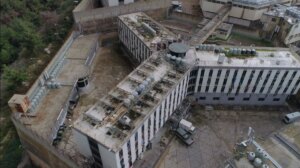
In Israeli military calculations, Ali Al-Taher Heights does not appear to be a separate target or a station that ends at the borders of the hill. The site overlooks a group of villages and roads leading to Nabatieh, and is located at the entrance to a broader geographical area extending towards Iqlim al-Tuffah and Jabal al-Rayhan, where Hezbollah has maintained a military and logistical presence for decades.
According to a report published by the Associated Press, Israeli control over Ali Al-Taher may open the way for more pressure on Nabatieh, and also place the Al-Tuffah and Jabal Al-Rayhan regions among the upcoming military calculations. However, this remains an estimate of a possible path, as Israel has not yet officially announced its intention to advance into these areas or begin a ground operation against them.
The importance of Ali Al-Taher stems from its high location and its ability to uncover roads linking the villages of the region to the city of Nabatieh, as well as the network of tunnels and facilities that Israel says Hezbollah used as command centers, weapons depots, and facilities for housing fighters. If Israel succeeds in establishing its control over the site, it may be able to expand the scope of surveillance and threaten the movement and supply lines in the vicinity of Nabatieh.
But the limits of Israeli control are still controversial. The Israeli army announced the achievement of “operational control” above and below the ground and the removal of Hezbollah fighters from the tunnels, while Lebanese accounts reported that the Israeli forces took control of some of the southern entrances to the complex and monitored the northern entrances with drones, without it being proven that they had tightened their control over the entire network extending under the heights.
The continuation of bombing and bombings after the Israeli announcement reinforces doubts about the completion of the operation. If control had been completely decided, the question remained about the reasons for continuing the raids and engineering operations in the site and its surroundings, and whether Israel was still trying to reach sections of the tunnels or prevent fighters from using them.
As for Al-Tuffah and Jabal Al-Rayhan, they differ geographically and militarily from Ali Al-Taher. The region is more extensive and complex, and includes highlands, valleys, forests, and intersecting roads, which makes any Israeli attempt to advance within it more costly than controlling a specific location. Access to it does not necessarily mean the ability to completely occupy or subjugate it.
However, controlling Ali al-Taher gives Israel an advanced pressure point in the depths surrounding Nabatieh, which it may use to launch raids, carry out monitoring, reconnaissance, and blockade operations, without the need to launch a large ground invasion. Thus, the hill may turn into a platform for imposing a fire siege on wider areas, rather than just a military site under occupation.
On the other hand, the loss of the site constitutes a field strike for Hezbollah, especially if it affects the movement lines between Nabatieh and the surrounding highlands. But it does not mean the fall of his system in the Al-Tuffah and Al-Rayhan region, where the sites and supply routes are distributed within a wider area that is difficult to summarize with one point.
Therefore, the question after Ali Al-Taher is not only related to the site that Israel took control of, but rather about the next step that it may try to build on this progress: Will it be satisfied with establishing its presence and destroying the tunnels, or will it begin a new phase of attrition targeting the Al-Tuffah and Jabal Al-Rayhan regions and putting Nabatieh under direct military pressure?
The answer will emerge from the nature of the raids and movements during the coming days. If the Israeli focus gradually moves deeper into the heights and the roads leading to them, the fall of Ali Al-Tahir will have already marked the beginning of a broader geographical battle. However, if the activity remains confined to the hill and its surroundings, Israel may be using the site primarily to improve its military and negotiating position, not to launch a new ground advance.