“Lebanon Debate”
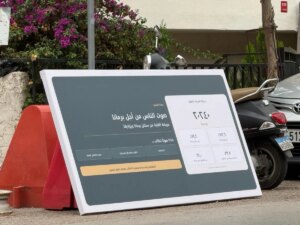
Objections and protests rose after the issuance of private generator bills, which rose significantly beyond the ability of the poor and low-income Lebanese to pay them, especially since they were random and escaping any oversight, warning of the possibility of popular protests that may be around the corner to express the impoverishment approach that prevails in government policy in Lebanon.
In the face of this illogical reality, the Prime Minister, Dr. Nawaf Salam, hastened to hold a meeting at the government palace at the hour, devoted to discussing the situation of private electric generators, the rise in bills, and ways to tighten the control of violations, in the presence of the Minister of Economy and Trade, Dr. Amer Al-Bassat, the Minister of Energy and Water, Joe Al-Saddi, the Attorney General at the Court of Cassation, Judge Ahmed Rami Al-Haj, the Director General of State Security, Major General Edgar Lowndos, the head of the Information Division, Brigadier General Mahmoud Qubrasli, and the Beirut Police Commander, Brigadier General Imad Al-Jamal, Director General of the Ministry of Economy and Trade, Dr. Muhammad Abu Haidar, and Major Rami Shuqair for the Information Division.
After the meeting, the Minister of Economy and Trade, Amer Al-Bassat, confirmed that the increases in fuel prices, especially diesel, reflected an increase in the cost of electricity production for generator owners, indicating that this increase in the actual and justified cost does not mean allowing unjustified increases to be imposed on citizens or violating the official pricing.
Al-Bassat said that “there is an actual and justified increase in the cost,” as a result of the rise in the price of diesel and its impact on the prices of electricity provided by generators. However, he stressed, on the other hand, that “the rise in the price of diesel does not give anyone the right to exploit people’s need for electricity, nor does it justify violating the official pricing or imposing illegal additional fees and allowances.”
He explained that the pricing issued monthly by the Ministry of Energy and Water originally takes into account the cost of diesel, operation and maintenance, and the profit margin, and therefore high fuel prices cannot be used as an excuse to impose additional allowances outside the specified pricing.
Al-Bassat pointed out that the Ministry of Economy and Trade had previously implemented a clear model in Tripoli and the port for dealing with violations of generator owners and unjustified increases, through cooperation between the ministry, security services, local authorities, and the judiciary.
He explained that arrest reports were organized and measures were taken against violators, and in about 24 cases the matter reached the point of confiscating generators and handing them over to local authorities, ensuring continued service to citizens.
He revealed, “Under the auspices of His Excellency the President, we decided today to circulate this mechanism across all Lebanese territories,” noting that the Ministry of Economy and Trade, through the Consumer Protection Directorate, will intensify detection and monitoring operations and organize arrest reports against violators.
He added that a direct working mechanism had been agreed upon between the Ministry, local authorities, public prosecutions, and security agencies, ensuring a rapid transition from detecting the violation to referring it to the judiciary, obtaining the necessary judicial signals and implementing them, leading, when the legal conditions are met, to seizing and confiscating the generators.
Al-Bassat explained that if a generator that provides electricity to a specific area is confiscated, coordination will be made with the competent local authority to receive it and ensure continuity of service, “so that the citizen does not pay the price for the generator owner’s violation.”
He pointed out that the governors, mayors, and municipalities will also have a direct role in implementing this mechanism across the entire Lebanese territory.
The Minister of Economy stressed that the message must be clear, saying: “The official pricing is not a proposal, commitment to meters is not an option, and no one has the right to add fees and allowances to the citizen’s bill of his own.”
He stressed that the Ministry will not be satisfied with warnings or seizure reports that remain unimplemented, stressing the necessity of adopting a clear and rapid path that begins with “a disclosure, a seizure report, a court, a judicial signal, and then implementation.”
Al-Bassat concluded by stressing that the state will not allow the exploitation of citizens’ need for electricity, stressing that whoever believes that he can exploit this need or that the state will turn a blind eye to violations “will discover that this is not the case.”