“RED TV”
Between a salary that is not sufficient for more than basic needs, prices that continue to rise, and taxes raised to finance a budget that is already suffering from imbalance, the Lebanese are entering a harsher period of living, while their purchasing power is shrinking under the pressure of inflation, war, and destabilization. In a scene summed up by wage numbers and the cost of bread and fuel, the gap between what citizens earn and what they need to live seems wider than ever before.
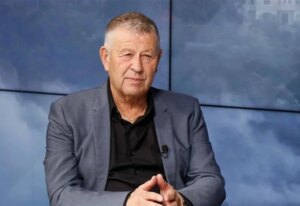
Professor of Political Economy, Dr. Mohamed Moussa, warned of the continued deterioration in the economic and living conditions in Lebanon, considering that the Lebanese are now facing accumulated pressures on their purchasing power in light of rising prices and declining incomes, in parallel with the repercussions of the war, regional crises, and the absence of stability, which, in his opinion, constitutes the basic gateway to any investment or economic recovery.
Moussa said, during an interview on the “3:15 Economy” program on RED TV, that the International Monetary Fund report “was very harsh, but it mimics the Lebanese reality and reflects the reality of the crisis,” pointing out that the minimum wage today is only about $310.
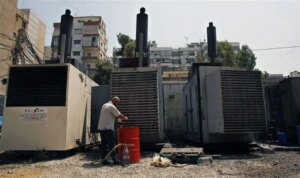
He pointed out that the minimum wage is now approximately equivalent to the price of 10 tanks of gasoline, at a time when the Lebanese face increasing daily burdens, especially with the approaching of what he described as “the month of Ramadan,” meaning schools, diesel fuel, hospitals, and insurance renewal, in addition to the need of residents of villages and outskirts for diesel fuel for heating.
Moussa explained that the inflation rate reached 17.5%, which means an increase in prices without a corresponding increase in resources, considering that the purchasing power of the Lebanese is the first to be affected by this reality.
He pointed out that there have been no actual increases in public and private sector salaries so far, noting that everything proposed is still in the context of talking about increases that have not yet been approved or paid.
In an approach to the size of the gap between prices and wages, Moussa said that the price of a loaf of bread has increased today about 60 times compared to 2019, while salaries have not increased by the same amount, stressing that this reality is not limited to bread, but rather applies to various basic commodities.
Moussa touched on the impact of the war and the global oil crisis on Lebanon, stressing that the country, as an oil consuming country, is directly affected by any global turmoil in the energy markets, while the Lebanese oil file is still frozen. He said sarcastically: “Our oil is sleeping with Total and they are snoring in the sea.”
Regarding taxes and financing the budget, Moussa indicated that officials say that the budget is unsustainable and that the state is forced to impose taxes to finance it, at a time when ESCWA reports indicate, according to what he said, that between 50% and 60% of the Lebanese are either poor or below the poverty line.
He also pointed out that the World Bank report showed the worsening crisis with a decline in growth by 6.4%, linking this to the cessation of tourism activity and the impact of various economic sectors.
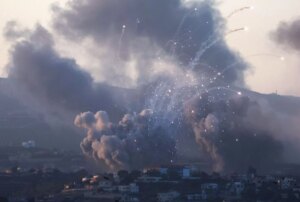
Moussa stressed that “stability is the key to investment,” but Lebanon, as he put it, is still experiencing a period of fragile stability in light of the continued Israeli occupation in the south.
He added that “Lebanon is still in the eye of the storm,” considering that as long as the region remains inflamed, the country will remain vulnerable to its repercussions and will be more affected by them.
Moussa described the living situation of the Lebanese as “deplorable,” as a result of the continuous rise in prices since 2019, through the revolution, the Corona pandemic, the Beirut port explosion, the Russian-Ukrainian war and its economic repercussions, all the way to the Gaza war, the Iranian-Israeli war, and the outbreak of the region.
He stressed that the purchasing power of the currency is constantly declining, which leads to a decrease in its actual value and the erosion of citizens’ ability to purchase goods and services, considering that the Lebanese are now living in a state of increasing deficit in the face of daily burdens.
Moussa concluded by saying, “All Lebanese live in a state of helplessness, and if America itself is going through a period of economic turmoil, what will the situation be like in a country like Lebanon?”, referring to the extent of the Lebanese economy’s fragility in the face of any internal or external disturbances.
This reality comes as an extension of an economic and livelihood path that began to worsen since 2019, and was followed by internal and external crises, from the Corona pandemic to the Beirut port explosion, the Russian-Ukrainian war, and then tensions and wars in the region, which made the Lebanese economy more vulnerable to shocks, at a time when wages and purchasing power remained unable to keep pace with the continuous rise in the cost of living.