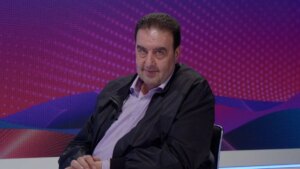
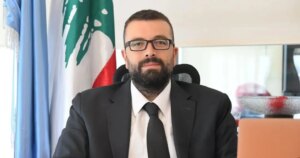
Chairman of the Parliamentary Health Committee, Representative Bilal Abdullah, raised the ceiling of confrontation in the issue of comprehensive health coverage, threatening to reveal the name of any party working to obstruct its approval to serve a private interest, at a time when the proposal is still awaiting inclusion on the agenda of the joint parliamentary committees.
Abdullah said, in an interview with Al-Diyar, that the proposal for a comprehensive health coverage law was presented more than two or three years ago, noting that it was presented to the three presidents, before Parliament Speaker Nabih Berri referred it directly to the joint committees with the aim of shortening time.
He explained that the joint committees formed a subcommittee that included representatives of various parliamentary blocs, which studied, revised and amended the proposal during dozens of sessions, with the participation of all stakeholders in the health sector and the World Health Organization.
He pointed out that the International Monetary Fund and the Ministry of Public Health also participated in the discussions, given the ministry’s primary role in implementing the project, pointing out that the subcommittee completed the final version and approved it, then placed it in Berri’s custody and informed the President of the Republic and the Prime Minister of its details.
Abdullah confirmed that the joint committees were supposed to begin studying the proposal in preparation for completing its legislative path, but its decision was delayed, despite its importance to Lebanese society.
He added that the members of the committee explained to Berri all aspects of the proposal, including the governance mechanism, funding sources, categories covered, and the entity that will manage the system, in addition to the necessary procedures to ensure its continuity, stressing that the Chairman of the Council expressed response and support for the project.
Abdullah revealed that the President of the Republic asks him, whenever he meets him, about the fate of the health card, and he was quoted as saying: “If the matter were within my authority, I would sign it now,” stressing that the authority to approve the project belongs to the House of Representatives, and that delays are currently occurring within the House, specifically in the joint committees.
He expressed his belief that Deputy Speaker of the House of Representatives, Elias Bou Saab, possesses the social sense and commitment necessary to manage a session dedicated to discussing the proposal, revealing that he requested that the file be included as a single item on the agenda, given its sensitivity and importance and the need to allocate sufficient time to discuss its details.
Regarding funding sources, Abdullah explained that the proposal is based on internationally approved mechanisms, including imposing specific fees to finance the health sector, in line with the models adopted by the World Health Organization.
He pointed out that the committee studied about 60 models applied in European, Asian and African countries, some of which are more developed than the Lebanese model and others less than it, stressing that the project is not a Lebanese invention, but rather a scientific approach aimed at ensuring continuity and protecting the citizen’s right to health and to live in dignity.
He said: “The country of radiation and civilization has no value if the Lebanese citizen’s health and dignity are insulted.”
Abdullah confirmed that the project will include no less than 60% of the Lebanese, and that the entire Lebanese society may benefit from it, explaining that those affiliated with the National Social Security Fund will receive the comprehensive package related to preventive medicine.
He pointed out that the system includes a small subscription linked to the minimum wage, which ensures its continuity and prevents it from later turning into an unfundable project, pointing out that the coverage will not be limited to hospitalization, but will include primary health care, preventive medicine, and a wide range of health services.
Abdullah called for keeping the file away from all political calculations, considering it a national and humanitarian project par excellence, and relying on the support of the three presidents, members of the Parliamentary Health Committee, and the representatives, in addition to the Lebanese people’s urgent need for this coverage.
He hinted at revealing the obstructionists to public opinion, saying: “If it becomes clear to me, during the discussion of the proposal after placing it on the agenda of the joint committees, that someone is obstructing it for some interest, I will announce his name publicly, and I will not be afraid, and I will be frank with the Lebanese people about everything.”
Abdullah concluded by recalling that the approval of the social retirement system was one of the most prominent achievements of the previous session, expressing his hope that the approval of comprehensive health coverage will be the next achievement, ensuring the Lebanese have the minimum requirements for living and their basic rights.