The United States has offered a $10 million reward for information on five prominent leaders in the Iranian Revolutionary Guard, in a move that coincides with the escalation of American economic pressure on Tehran.
The “Rewards for Justice” agency of the US State Department announced on Monday that the reward includes information about the Commander of the Revolutionary Guard, Ahmed Vahidi, the Chief of Staff, Ali Abdullahi, and the Chief of Revolutionary Guard Intelligence, Majid Khademi, in addition to leaders responsible for drone and electronic hacking programs within the Revolutionary Guard.
The announcement comes at a time when Washington has intensified its economic action against Iran, as US Treasury Secretary Scott Besent, on Monday, revealed plans to expand pressure on Tehran, including threatening to impose secondary sanctions on countries and entities that continue to deal with it.
Besant said, during a press conference, that the goal of the United States is to “sever every economic artery” that keeps the Iranian regime in place, adding: “We will hold everyone accountable, and this is the policy of economic strangulation with which we target this regime.”
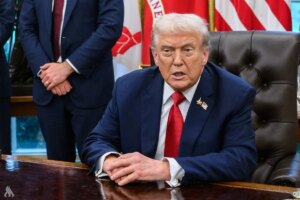
The US Treasury Secretary warned countries that do not join the sanctions that they “will share Iran’s isolation,” noting that US President Donald Trump is contacting leaders of countries around the world to urge them to stop their dealings with Tehran.
Besant added that any party that facilitates money laundering operations on behalf of Iran will be subject to exclusion from the US dollar system, stressing that “the countdown has begun.”
In a separate statement, the US Treasury Department announced that the new measures target five main sectors that Iran uses to support its economy, which are digital assets, technology, gold, aviation, and maritime shipping.
The Ministry explained that the expanded secondary sanctions will include the aforementioned sectors, as part of the economic pressure campaign on Tehran.
These measures come after about 6 months of war between Iran and the United States, in light of the faltering efforts to reach a settlement and the continuing tension regarding shipping traffic in the Strait of Hormuz, which represents one of the most important sea lanes for global trade and energy.