“RED TV”
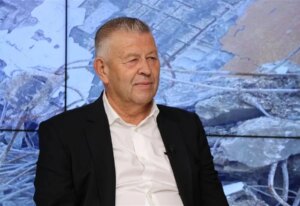
Rola Muhammad Soubra, a doctoral researcher in business administration and a consultant in educational administration, leadership and governance, who specializes in developing strategies for best practices in educational integration and comprehensive access, warned of the danger of the continued phenomenon of forging certificates in Lebanon and its repercussions on the reputation of the educational sector and the image of the country abroad. She considered that addressing the crisis begins with mechanization and censorship and lifting the political and sectarian cover on corrupt administrators, in addition to establishing clear mechanisms that ensure tracking the academic path of every student.
In an interview on the “3:15 Meeting” program on RED TV, Soubra said that education in Lebanon was greatly affected during the Corona pandemic, noting at the same time that corruption is one of the most prominent factors that contributed to the decline of the educational sector and the exacerbation of its crises.
She believed that the educational crisis that Lebanon reached was not the result of a single factor, but rather came as a result of the accumulation of a series of problems that directly affected education, pointing out that the Lebanese ministries lack several basic concepts, including organization, risk management, and crisis management.
She stressed the need for official administrations to learn how to deal with crises and benefit from them, instead of just managing their repercussions circumstantially, considering that any crisis can turn into an opportunity if it is dealt with according to clear and thoughtful mechanisms.
Regarding the issue of fake certificates, Soubra explained that the reasons for resorting to them are multiple, including the pursuit of social prestige, and the need of some students who leave Lebanon for certificates to use abroad.
She also pointed out that the cost of studying for a master’s and doctorate in Lebanon is very high, which may prompt some people to pay about $10,000 to obtain a fake certificate in order to avoid bearing a higher cost, but at the same time she stressed that the issue of tuition fees does not constitute a justification for forgery.
She said that what is required is to put all the causes and factors leading to the phenomenon on the table, without using them to justify corruption or violating the law.
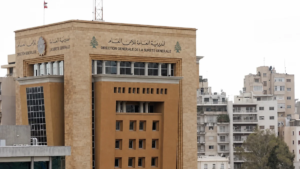
Soubra called on the Ministry of Education to impose control on university prices, which would contribute to reducing the circumstances that might push some people to search for illegal methods to obtain degrees.
She considered that the beneficiaries of this corruption are some “shops” of commercial schools and universities, in addition to corrupt administrators, stressing that the ministry’s responsibility lies in developing a serious mechanism to clean the sector of corruption.
She acknowledged that the Ministry may not be able to address everything that has accumulated in previous years or reopen all old files, but she stressed that this does not prevent it from laying clear foundations to prevent the recurrence of these violations in the future.
In this context, Soubra proposed a set of possible measures, including adopting a “barcode” system, dismissing corrupt administrators, and implementing other supervisory and administrative mechanisms that facilitate the detection and reduction of violations.
She stressed that the reputation of forging certificates in Lebanon not only harms educational institutions, but also harms the image of the country as a whole, pointing out that many young people who immigrate to work abroad are now facing problems due to the doubts surrounding some of the certificates issued by Lebanon.
She stressed that “lifting the political and sectarian cover on corrupt administrators constitutes the most important step to begin the process of cleansing and combating corruption,” considering that any actual reform remains incomplete if the corrupt remain politically or sectarianly protected.
Regarding the possibility of controlling forged certificates, Soubra explained that this can be done through the private number of each student in the Ministry of Education, and by tracking the sequence of his certificates from one educational stage to another, so that any deficiency or defect in this sequence can reveal the possibility of forgery.
However, she pointed out that there are practical obstacles to a comprehensive re-audit of all files, most notably the huge shortage of human resources within the Ministry of Education, which makes reopening and inspecting each file extremely difficult.
She added that the Ministry may also not have all the papers and documents required to review and scrutinize old files, which makes it more difficult to address previous violations.
On the other hand, Soubra stressed that “mechanization is the basis of everything, and constitutes the basic foundation of any reform process,” considering that the transition to digital systems allows controlling educational paths and reducing tampering with documents and certificates.
She concluded by affirming that the hardworking student is the most affected by corruption and forgery, because he struggles and exerts his effort to succeed, stressing that the state’s responsibility lies in fairness to him by controlling forgery operations and protecting the value of the certificate, allowing the true and hardworking student to emerge and take his rights away from unfair competition.