Reuters revealed that Lebanese President Joseph Aoun will present to US President Donald Trump a written and detailed plan dealing with the mechanism for disarming Hezbollah, in exchange for Washington exerting pressure on Israel to withdraw from the lands it still occupies in southern Lebanon.
Aoun arrived in Washington on an official visit during which he will meet US Secretary of State Marco Rubio and a number of officials, before his expected meeting with Trump at the White House on Tuesday. This is the first visit by a Lebanese president to the White House in nearly two decades.
Reuters quoted a high-ranking Lebanese official as saying that Aoun will submit to the US administration a document that includes a practical vision for dismantling the party’s military arsenal, based on his belief that Trump has sufficient pressure tools to push Israel to withdraw its forces and help Lebanon regain its sovereignty.
The Lebanese approach, according to circulating data, revolves around linking the steps to confine arms to the state with a gradual and guaranteed Israeli withdrawal, and the deployment of the Lebanese army in the areas being evacuated, in a way that prevents the occurrence of a security vacuum or the repositioning of any armed groups.
Aoun’s visit comes after a round of Lebanese-Israeli negotiations sponsored by the United States in Rome, which focused on implementing the “model areas” plan in the south, which stipulates the transfer of control to the Lebanese army in parallel with a gradual Israeli withdrawal and dealing with the arms issue outside the authority of the state.
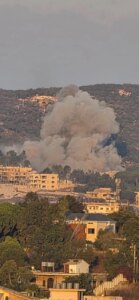
But the path faces major obstacles, as Israel insists on linking any withdrawal to security guarantees and actual disarmament on the ground, while Lebanon demands a clear and simultaneous withdrawal, and refuses to turn the southern regions into a permanent security belt within its territory.
In parallel with the American move, ideas were put forward to involve European countries in an investigation and monitoring mechanism within the areas that will witness an Israeli withdrawal and the deployment of the Lebanese army, with the aim of ensuring that they are free of illegal weapons and installing new security arrangements.
Thus, Aoun brings to Washington a very sensitive equation: practical Lebanese steps in the arms issue, in exchange for a clear American commitment to extract an Israeli withdrawal and restore the state’s full sovereignty over the south.