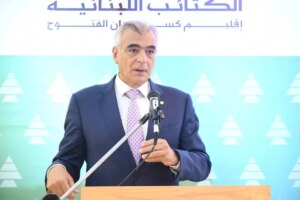
Former Minister Mustafa Bayram affirmed that the resistance “was and remains keen on the Lebanese state and the unity of the nation,” stressing that it will not be drawn into any internal strife, at a time when he accused the authority of negligence in defending the Lebanese and their rights in the face of Israeli attacks, considering that Israel is trying to exploit internal divisions to achieve goals that it was unable to impose militarily.
Bayram said that what Lebanon is witnessing today is the result of the performance of an authority that has “lost its national compass,” considering that it has failed to carry out its duty to defend the Lebanese and preserve their rights in the face of Israeli attacks.
He pointed out that the resistance, since the liberation of southern Lebanon in 2000, has been committed to the principle of resorting to state institutions and the judiciary, and has never acted as an alternative to them, stressing that its permanent choice was to preserve civil peace and consolidate the concept of the state, despite the sacrifices it made in defense of Lebanon.
Bayram considered that the campaigns targeting social, educational, and relief resistance institutions, including Imam Mahdi Schools, Imam Mahdi Scouts, the Islamic Health Authority, and the Islamic Message Society, come within the framework of incitement and an attempt to target the environment that “provided martyrs in defense of the homeland,” adding that those who sacrificed for Lebanon are more deserving of citizenship and participation in shaping its future.
He criticized the Authority’s performance in dealing with the Israeli agreements and attacks, considering that it did not exercise its powers in a way that preserved Lebanon’s sovereignty, and that Israel seeks to exploit the internal reality to cause an internal conflict that will achieve political and security gains for it that it was unable to achieve through military confrontation.
He stressed that the resistance “will not be drawn into internal strife,” but on the other hand, it “will not stand idly by in the face of any attack targeting it or its environment,” stressing that protecting Lebanon and its dignity will remain a priority, and that pride is created by those who make sacrifices and persistence.
At the conclusion of his positions, Bayram expressed his confidence in the choices of the resistance and in the awareness of its audience, relying on the wisdom of the leadership of the Lebanese army in protecting the nation and its unity, stressing that attempts to transform the army into a tool that serves Israel’s goals “will not succeed,” and that Lebanon’s future will be made by those who adhere to sovereignty and dignity, not by those whom he described as “those with inaction.”
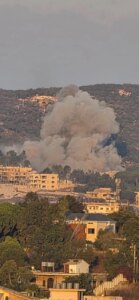
Bayram’s positions come in light of the escalation of the internal political debate regarding the future of the security situation and the role of the resistance, coinciding with the continuation of Israeli attacks on Lebanese regions, and the intensification of international pressure related to the implementation of security understandings and the cessation of hostilities. It also coincides with a broad internal debate about the role of state institutions, mechanisms for strengthening its authority, and maintaining internal stability in light of rapid regional developments, amid repeated warnings from various parties of the dangers of being drawn into internal confrontations that may reflect negatively on the Lebanese arena.