Today, Monday, new explosions rocked areas in southern Iran near the Strait of Hormuz, coinciding with the continued exchange of military strikes between Tehran and Washington, and diplomatic movements led by mediating countries in an attempt to contain the escalation.
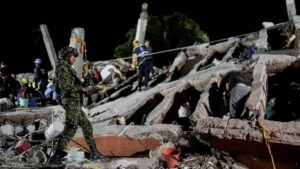
The Iranian Mehr Agency reported that explosions were heard in the vicinity of the city of Bandar Abbas and Qeshm Island, located near the strategic Strait of Hormuz.
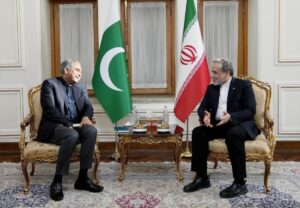
In parallel, Iran announced that it was continuing its diplomatic consultations with Qatar, Pakistan, and the Sultanate of Oman, which are the mediating countries in the war with the United States, with the aim of “avoiding escalation.”
Iranian Foreign Ministry spokesman Ismail Baghaei said, “The role of mediators is to continue their efforts to avoid escalation of tensions,” noting that his country has been in contact in recent days with Qatar and the Sultanate of Oman, in addition to Pakistan.
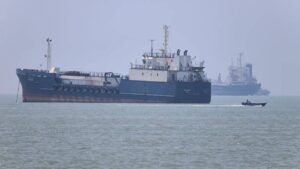
This comes at a time when American and Iranian forces exchanged intense attacks with missiles and drones, during which Iran targeted American facilities in a number of Gulf countries and re-announced the closure of the Strait of Hormuz, which resulted in a rise in oil prices.
For its part, the US Army announced that it targeted, on Sunday, Iranian military air defense systems, coastal radar sites, missile capabilities, drones, and small boats, using fighter planes, warships, and drones.
On the other hand, the Iranian Revolutionary Guard announced today, Monday, the targeting of American military facilities in Bahrain and Kuwait, the destruction of radar systems in the Sultanate of Oman, and the bombing of fuel tanks and ammunition depots at the Prince Hassan Air Base in Jordan, in the latest response to the American strikes.
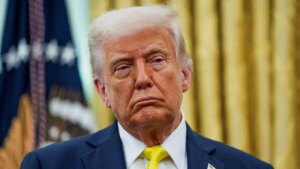
In turn, US President Donald Trump said, in a telephone interview with Reuters, commenting on the US strikes: “We are hitting them hard,” indicating that he considers the ceasefire to have ended, while keeping the door open for further talks.
This new round of escalation casts doubt on the future of the interim US-Iranian agreement, which was signed last month with the aim of reopening the Strait of Hormuz and ending the war after additional negotiations extending for 60 days.
This escalation is the latest in a series of attacks and counterattacks related to the conflict over navigation in the Strait of Hormuz, in light of the expansion of the scope and heightened intensity of military operations.