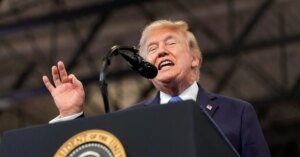
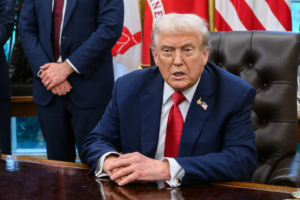
US President Donald Trump reiterated that the Iranian funds that will be released will not go directly to Tehran, but rather will be used exclusively to purchase American products, in a position that reflects the continued discrepancy between the American and Iranian narratives regarding the terms of the recent understanding between the two sides.
Trump said, in a post on his “Truth Social” platform, today, Wednesday, that the United States “will not provide any money to Iran,” noting that Tehran has assured Washington that it will not impose any transit or service fees on passage through the Strait of Hormuz.
Trump warned that Iran’s imposition of any traffic fees in Hormuz would lead to an immediate halt to negotiations, saying that his country did not give Iran money and did not release any of its funds directly, but rather it would release part of the funds that are entirely under American control, to be used for the benefit of farmers and ranchers in the United States by purchasing corn, wheat, soybeans, and other products.
He added that Washington will buy food for Iran exclusively from American products, in a new confirmation that the released funds will be conditional on a specific spending mechanism subject to American supervision.
In the same context, US Treasury Secretary Scott Besent explained, in statements to CNN, that a very large percentage of Iranian funds will be allocated to purchasing American food and medicine under the supervision of the Treasury Department, stressing that “any money the Iranians receive is for the Iranians.”
On the other hand, Tehran denied this American story, as Iranian Foreign Ministry spokesman Ismail Baghaei confirmed yesterday, Tuesday, that the reports linking the release of frozen Iranian funds to the purchase of agricultural products or materials from the United States were not true.
The Governor of the Central Bank of Iran, Abdel Nasser Hemmati, also denied the validity of Trump’s announcement regarding Tehran’s obligation to spend the released funds on American exports, an indication of the continued conflict of positions between the two sides regarding the interpretation of the terms of the agreement.
This debate comes after the signing of a memorandum of understanding between Trump and Iranian President Masoud Pezeshkian on June 18, which included 14 items, including granting Tehran relief from US sanctions and releasing part of its frozen financial assets abroad.
Within the framework of this path, the US Treasury Department announced that it will temporarily lift the sanctions imposed on the production, sale and delivery of Iranian crude oil and related products until August 21, in light of the continuation of negotiations between Washington and Tehran.
The controversial files between the two sides remain open on more than one level, from the frozen funds and the mechanism for releasing them, to the inspection of nuclear facilities by the International Atomic Energy Agency, all the way to the Strait of Hormuz and the possibility of imposing fees on it after the 60-day period allocated for holding technical talks between the two parties.