“Lebanon Debate” – Political Editor
With the start of the countdown and counting of the 60 days stipulated in the US-Iranian understanding, a careful reading of its provisions, far from any doubts or even illusions, indicates that what has been achieved does not rise to the level of a final solution to the conflict. Rather, the initial impression left by this understanding is that it is a vision of the solution and not the solution itself, as it includes a set of ideas and foundations that can be built upon and transformed into draft political and diplomatic steps that are applicable in the future, after long negotiations. It is fraught with mines and complications.
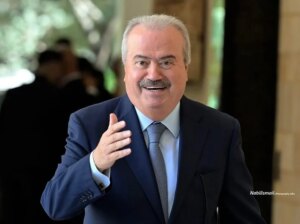
The issue at hand is “much bigger than the announced text,” says former Minister Karim Pakradouni, explaining that “the understanding represents only the first translation of a long process, and will not quickly turn into a legislative framework or a final agreement with complete components.”
Pakradouni indicated to “Lebanon Debate” that what has been published so far is the American text that Tehran agreed to, but on the other hand, there is also an Iranian text that has not yet been revealed, which means that the published document is likely to be amended and developed through a long process of diplomatic work, including unannounced negotiations and secret communications.
Pakradouni believes that the Iranians will advance step by step in managing the next stage, after Iran has practically emerged from a stage in which it feared being subjected to a direct military strike, citing the way US President Donald Trump dealt with it as an existing state and negotiating partner, which indicates that the military option is no longer at the forefront of the scene.
Accordingly, Pakradouni describes the understanding as a “window” overlooking a very complex regional reality that extends from Iran to Israel, and opens the door to the possibility of breaking out of the stalemate that dominated the region, where there was no actual progress towards settlements and no retreat towards comprehensive explosion. The basic value of this understanding lies in that it transferred the American-Iranian relationship from the logic of military confrontation to the logic of political and diplomatic understanding, and instead of military means being the main tool for managing differences, negotiations and channels became Politics is the governing framework for the relationship between the two parties.
However, Pakradouni does not believe that the final text has been born yet, because the political signals contained in it reflect a general trend towards a settlement, but at the same time, they confirm that negotiations will continue and that there is still a long way to go before reaching a comprehensive and final agreement.
As for Lebanon, Pakradouni does not hide his reservations about linking its fate entirely to the path of the American-Iranian understanding, as he reveals that merging the Lebanese file with the Iranian file serves Iranian interests more than it serves Lebanon, stressing that the Lebanese state is required to move from a position of spectator to the understanding between Tehran and Washington, to launching an independent diplomatic effort to devote a special negotiating track to Lebanon to defend its own interests, especially since history has proven that the more Lebanon is linked to regional files, the worse the situation deteriorates. The chances of addressing it independently have declined, as the issue of Israeli withdrawal cannot be resolved automatically through the American-Iranian agreement, but rather requires an independent negotiating framework that addresses its specificities and complexities.
Pakradouni goes further than that when he demands the establishment of a Lebanese-American negotiating table, because the Lebanon issue is no less important than the Iranian issue, pointing out that the only sentence that was included in the understanding regarding Lebanon is not sufficient to address the crisis, even if it is a positive indicator that should be built upon.
Therefore, Pakradouni believes that the ceasefire and Israel’s withdrawal require launching Lebanese negotiations with Israel under American sponsorship, as happened in the Iranian track, because the understanding between Washington and Tehran has moved the region from one stage to another, but it does not mean at all that all crises have been resolved, whether related to the Palestinian issue, the Golan Heights, or Lebanon.
It is the state’s responsibility today to launch a broad diplomatic campaign to complete the path of solutions, according to Pakradouni, who finds that this requires a clear political mechanism similar to the one established between the Americans and the Iranians, but this time between Lebanon and the United States.
Pakradouni also criticizes those who oppose the negotiation path sponsored by Washington, considering that whoever rejects it wants to undertake the negotiations himself, based on the logic that whoever fights on the ground is the one who sits later at the settlement table, especially since the state should have moved and clearly announced, since the start of the Islamabad negotiations, the existence of two parallel and not necessarily contradictory paths, and to confirm the separation between the Lebanese path and the Iranian path.