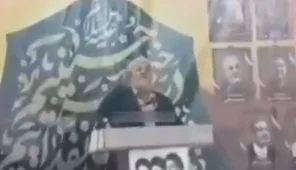
Iran responded to the American threats to target its oil infrastructure, with a direct message that carried a warning against the expansion of the confrontation into the energy markets, as the commander of the “Khatam al-Anbiya” headquarters, Major General Ali Abdullah, confirmed that the export of oil and gas “will either be available to everyone, or it will not be available to anyone.”
Abdullah said, in statements reported by official Iranian media, that the United States, on the one hand, talks about agreement and negotiation, and on the other hand, practices hostile actions, considering that this contradiction between words and actions constitutes, as he put it, the main factor for insecurity in the region, and puts the security of international trade and economics and the security of countries, especially the Strait of Hormuz, at risk.
He added that American officials, due to what he described as their lack of awareness of the nature of the Iranian people and their armed forces, continue to revolve in a vicious circle, considering that “repeated American lies” are one of the most prominent signs of this. He said that Washington would not be able, through propaganda and media war, to compensate for what he described as humiliation and successive defeats in its confrontation with the Islamic Republic of Iran, or to hide its tendency to ignite wars.
Abdullah warned the United States against launching new attacks against Iran, stressing that it would receive a harsher response than before, and that the flames of war would expand and become more widespread, in parallel with the worsening state of instability in the region.
He concluded by saying that Iran, in light of the recent American threats against the Iranian oil infrastructure, announces that the export of oil and gas “will either be available to everyone, or it will not be available to anyone,” in a clear indication that any harm to Iranian energy facilities may open the door to a broader disruption of the movement of energy in the region.
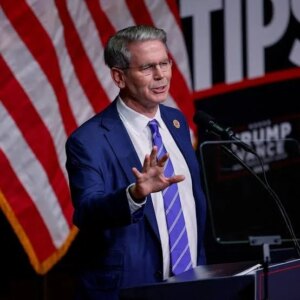
On Thursday, US President Donald Trump threatened that the United States “will hit Iran hard again,” speaking about the possibility of soon controlling Khark Island and other points of Iranian oil infrastructure, allowing Washington, according to his words, to have full control over Iranian oil and gas markets.
However, Trump later backed down from the plan to strike Iran on the same day, after he said that the discussions with the Islamic Republic of Iran had been submitted to the highest levels of the Iranian leadership and had been approved, an indication that the negotiation path was still in place despite the mutual verbal and military escalation.
These statements come at a very sensitive moment, as the threat to target Iranian oil facilities intersects with tension around the Strait of Hormuz, which constitutes one of the most important sea lanes for energy in the world. Any threat to the movement of oil and gas through this corridor reflects directly on international markets and raises the level of concern among energy importing countries.
Tehran is using the energy card as one of the basic deterrence tools in the face of American pressure, as it believes that targeting its oil facilities will not remain limited to Iran alone, but will have repercussions on the entire export system in the Gulf. Hence the phrase “either everyone or no one” comes as a political, economic and security message to Washington and its allies.
As for Washington, it threatens to target the Iranian oil infrastructure as part of a pressure policy aimed at pushing Tehran towards accepting the terms of negotiation, especially in the nuclear file and navigation security. But this type of threat carries great risks, because striking energy facilities could expand the confrontation from a limited military conflict to a global crisis affecting oil and gas prices and supply chains.
Between Trump’s threat and Abdullah’s warning, the region appears to be facing a very dangerous equation: negotiation is still open, but any error in calculations may move the confrontation from the negotiating table to the heart of the energy markets, where the cost does not remain limited to Iran and the United States, but rather extends to the entire global economy.