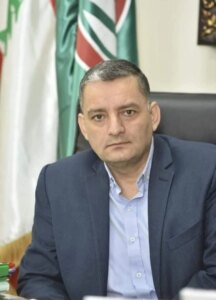
Member of the Loyalty to the Resistance Bloc, Representative Ali Fayyad, warned against any political path that does not start from a comprehensive ceasefire and preventing Israel from continuing its military operations, considering that any initiative that is not based on these two conditions is “meaningless.”
In an interview with Al-Mayadeen TV, Fayyad confirmed that the current data indicate that “no one can bypass the resistance in any formula for a solution,” stressing that it has the final decision regarding the south, and that it is continuing to confront Israel and has the ability to continue the confrontation.
He pointed out that the expansion of the battlefield allows the resistance to inflict more losses on Israel, stressing that its capabilities are still great despite the recent field developments.
Regarding internal affairs, Fayyad believed that the Lebanese authority was seeking to “overthrow sensitive internal balances,” warning that it was pushing the country toward a “moment of collision” that must be avoided.
He also criticized the political choices of President Joseph Aoun, considering that he reached his position due to American pressure, and he made choices that he described as costly at the Lebanese level.
In response to Aoun’s recent statements regarding Hezbollah Secretary-General Sheikh Naim Qassem, Fayyad said that Qassem represents a wide segment of the Lebanese and enjoys a great popular presence.
He stressed that the resistance does not demand that the state side with it, but rather calls for taking advantage of the elements of power that Lebanon possesses, by building a national vision that combines the role of the resistance and Lebanon’s foreign relations.
He also stressed his confidence in Parliament Speaker Nabih Berri with regard to adhering to the basic constants, praising at the same time the performance of the Lebanese Army leadership, considering that it is acting wisely and managing its position in accordance with the specificity of the Lebanese reality.
At the regional level, Fayyad considered that the region had entered a new phase, and that the limits of the American ability to impose new equations had become clear, suggesting that matters would likely end in an agreement between Washington and Tehran.
He pointed out that Iran’s entry into the front line in support of the resistance constituted a practical translation of the idea of ”unity of the arenas,” revealing that delegations from Hezbollah visited Turkey and received reassurances that Syria had no intention of moving against the resistance.
He concluded by stressing that the resistance environment is still adhering to its options despite the amount of sacrifices and losses, considering that these challenges increase its adherence to its positions.