While negotiations continue between Tehran and Washington to reach an agreement to end the war, Iranian chief negotiator Mohammad Bagher Qalibaf stressed that his country will not accept any agreement with the United States without certain guarantees to preserve the rights of the Iranian people, in a position that reflects continued Iranian doubts about the negotiating path, despite talk of progress in the talks.
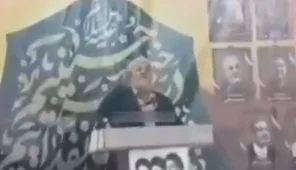
Ghalibaf said, during a speech following his swearing-in to the members of the new Presidency of the Iranian Shura Council, that Tehran does not trust Washington’s promises, stressing that Iran’s only criterion is to achieve tangible results on the ground before implementing any corresponding commitments, according to what was reported by the “IRNA” agency.
Qalibaf called for not turning internal differences into conflicts and divisions, stressing the need to maintain unity in the face of what he described as attempts to divide the country, in reference to the sensitivity of the internal moment that Iran is going through amid military, economic, and negotiating pressures.
These positions come at a time when American officials and informed sources confirmed that US President Donald Trump sent a tougher proposal to the Iranian side, which may prolong the talks and open the door to additional rounds of debate between the two parties.
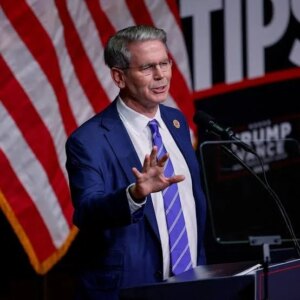
On the other hand, Trump said that the United States is close to concluding a “good agreement” with Iran, but he again waved the military option if the agreement was not fair to Washington, indicating in an interview with “Fox News” that he would resort again to the “War Department” if he did not get what he wanted.
Trump confirmed that he prefers the diplomatic option, considering that signing an agreement with Tehran means immediately reopening the Strait of Hormuz to navigation. He also made it clear that American forces will withdraw from the region as soon as the Strait is opened and the Iranian nuclear file is addressed.
The US President stressed the need to open the Strait of Hormuz immediately and without transit fees, and to completely prevent Iran from possessing any nuclear weapon, pointing out that negotiations take time because the Iranians are “experienced negotiators,” but at the same time he stressed that he is not in a rush.
Trump said that Tehran has already agreed not to develop or purchase a nuclear weapon, but the details related to implementation mechanisms still represent the main knot in the negotiations.
Talks between the two sides have been taking place through the Pakistani mediator for weeks, while sensitive points are still outstanding, most notably the fate of highly enriched uranium, which is estimated to weigh about 440 kilograms, as Tehran refuses to transfer it to a third country, especially the United States, while Washington clings to this condition as a basic guarantee for any agreement.
The file of Iranian funds frozen abroad also constitutes one of the main nodes, amid multiple proposals to address it. Iran wants clear guarantees that will allow it to access part of its frozen assets, while Washington seeks to link any easing of sanctions or release of funds to clear nuclear and security guarantees.
Ghalibaf’s statements reflect that Tehran does not want an agreement based on American promises alone, but rather on practical measures that precede its corresponding commitments. This means that the battle is no longer over the principle of the agreement as much as it has become over timing, implementation mechanisms, and guarantees that no party will back down from its commitments.
As for Trump, he is trying to use the factor of time and military and economic pressure to impose a more stringent agreement, which does not repeat the experience of previous agreements that he repeatedly criticized, and does not give his opponents inside America an opportunity to accuse him of making concessions to Tehran.
Between Washington’s strictness regarding the uranium and Hormuz issue, and Tehran’s insistence on guarantees and frozen funds, the negotiations are entering a very sensitive phase. The agreement seems possible in principle, but it is still stuck on the details that may determine whether the war will end with a political settlement, or the region will return to the cycle of military escalation.