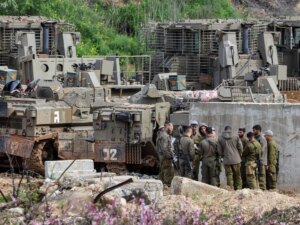
The Israeli newspaper “Jerusalem Post” acknowledged that the limited ground operations carried out by the Israeli army near the border, in addition to precise air strikes, did not succeed in ending the Hezbollah threat or achieving the stated goals of neutralizing it, in an admission that reflects the magnitude of the impasse that Israel faces on the Lebanese front.
According to what Al-Mayadeen reported from Israeli media, the newspaper pointed out that Israeli leaders repeatedly talked during the war about defeating Hezbollah and disarming it, but the field facts, according to its description, show that the party still maintains its capabilities and continues to play an active role at the military level.
The newspaper added that Hezbollah, nearly 3 years after the outbreak of the war, is still able to keep northern Israel under fire, an indication of the continuing challenge facing the Israeli security and military establishment in dealing with the Lebanese front.
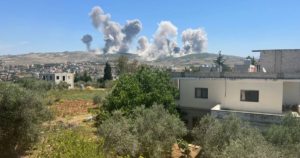
This acknowledgment comes at a moment of widespread field escalation in southern Lebanon, as Israel is trying to expand its ground and air operations in more than one axis, especially in the vicinity of Shaqif, Wadi Saluki, Dibbin, Ghandouriya, and Zawtar al-Sharqiya, coinciding with intense raids and evacuation warnings that affected a number of southern towns.
On the other hand, Hezbollah continues to announce operations targeting Israeli forces and their movements, using drones, devices, missile launchers, and targeting vehicles, in an attempt to prevent Israel from consolidating any field progress and turning it into a permanent military achievement.
Reading the “Jerusalem Post” is of particular importance because it comes from within the Israeli debate itself, where questions are increasing about the feasibility of limited operations in Lebanon, and the extent of the ability of air strikes to end Hezbollah’s military structure or push it to retreat from threatening the north.
The American Bloomberg Agency had indicated, according to the report, that Hezbollah had disrupted the attempt of Israeli Prime Minister Benjamin Netanyahu to shift the focus of public opinion towards the Lebanon front, after the failure in the war against Iran.
The agency stated that Israel’s expansion of what it calls the “buffer zone” in Lebanon, as well as in Gaza and Syria, did not prevent Hezbollah from turning the scene around by using drones guided by fiber-optic cables, capable of avoiding electronic interference and striking Israeli targets, including forces and areas in northern Israel.
These data reflect the transformation of drones into a central element in the confrontation, after they demonstrated the ability to bypass traditional monitoring and jamming systems, which imposes an additional challenge on the Israeli army in a region where ground combat overlaps with air attacks and electronic warfare.
In the background, Israel appears to be facing a double dilemma: on the one hand, it is trying to impose broad field pressure on Hezbollah inside southern Lebanon, and on the other hand, it finds itself facing an opponent that is still capable of responding and keeping the north in danger, despite the intensity of the raids and the scale of the operations.
Between the Israeli recognition of the failure to neutralize Hezbollah, and the continuation of confrontations on the ground, the Lebanese front appears to be open to a long phase of attrition, as the issue is no longer linked to an air strike or a limited operation, but rather to a broader struggle over the ability to withstand and impose equations.