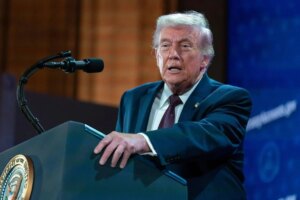
Indications are increasing that the US-Iranian confrontation may be entering a more dangerous phase, after US President Donald Trump sparked a wide wave of speculation by suddenly canceling his vacation in New Jersey and hastily returning to Washington, coinciding with reports that he was considering resuming military strikes against Iran.
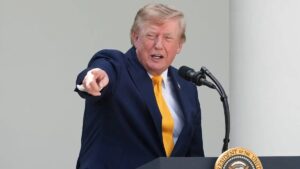
Trump increased the ambiguity surrounding American moves, after he himself announced on the “Truth Social” platform that he would not attend the wedding of his eldest son, Donald Jr., due to “government-related circumstances,” as he put it.
Trump wrote: “I wanted very much to be with my son, Don Jr., and his future wife, Bettina, but the circumstances related to the government, and my love for the United States of America, do not allow me to do so,” adding: “I feel it is important that I remain in Washington, in the White House, during this important period.”
These statements came at a time when the American CBS network revealed that the US army is preparing for the possibility of carrying out new strikes against Iran during the weekend, amid escalating military and political tension between the two sides.
American reports also reported that Trump held meetings with his senior advisors to discuss the war with Iran, without making a final decision yet regarding expanding military operations.
On the other hand, the Iranian government stressed that it “will not surrender to intimidation,” while the Iranian Revolutionary Guard escalated its tone, threatening to expand the scope of the war “beyond the region” if Iran was subjected to any new American attack.
This escalation coincided with intense diplomatic movements led by Pakistan to try to break the deadlock in the US-Iranian negotiations. Pakistani Army Commander Asim Munir, who arrived in Tehran on Friday, continued his efforts to reduce the escalation and push the negotiation process forward.
The Iranian Ministry of Foreign Affairs announced that Mounir and Foreign Minister Abbas Araghchi held lengthy talks until late at night, which dealt with diplomatic initiatives aimed at preventing the expansion of the war and enhancing stability in the region.
Pakistani Interior Minister Mohsin Naqvi also arrived in Tehran earlier this week for the second time in a matter of days, in an indication of the extent of Pakistani involvement in mediation between Washington and Tehran.
According to the information, several basic points still hinder reaching an agreement between the two parties, most notably the file of transferring Iranian highly enriched uranium abroad, and control of the Strait of Hormuz, in addition to Tehran’s demand to lift all US sanctions on Iranian oil exports.
Despite continued contacts, American officials confirmed that Trump has not completely closed the door to directing new strikes against Iran if the current negotiations fail, which leaves the region open to possibilities between a settlement and a military explosion.
Observers believe that Trump’s decision to remain in Washington and cancel his participation in a private family event reflects the sensitivity of the stage, especially with the high level of alert within the American military and security institutions, amid anticipation of whether the coming days will witness a diplomatic breakthrough or a new military escalation.