In light of the escalation of campaigns of abuse and hate speech on social media, Minister of Information, Lawyer Paul Morcos, stressed that freedom of expression remains a right guaranteed to everyone, but it cannot be separated from social responsibility and respect for human dignity and society.
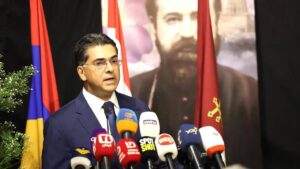
After participating in Sunday’s mass on the occasion of the 60th World Media and Social Communication Day in the Church of Our Lady inside the Patriarchal edifice in Bkerke, and meeting with Maronite Patriarch Cardinal Mar Beshara Boutros Al-Rai, Morcos stressed that “respect for human dignity is a duty, and freedom to express an opinion is guaranteed and reserved for everyone, but it must be balanced with social responsibility.”
He added: “If freedom turns into a means of sabotaging society, it loses its true meaning,” stressing the necessity of “establishing a balance between freedom and responsibility, so that political opinion is exercised freely without violating the rights and dignity of others, especially when it comes to the dignity of the country, the human being, society, or national and religious shrines.”
The Minister of Information indicated that media professionals “are unanimous in this sound opinion,” and are working to convey it to social media users “so that expression is responsible and appropriate.”
In response to a question about the campaigns taking place on digital platforms, Morcos explained that the Ministry “strengthened its actions towards campaigns that were accompanied by abuse and defamation,” pointing to the launch of broad awareness and guidance campaigns in cooperation with UNESCO, the United Nations Development Programme, production companies, and the Ministry of Education.
He revealed that a ministerial meeting was held with the aim of launching awareness programs in schools and universities, in order to “consolidate the educational, cultural and social structure,” considering that addressing these phenomena begins with “filling the deficiency in education and civic culture.”
Morcos stressed that “much of what goes beyond freedom of opinion on social media, including abuse, defamation, and hate speech, falls within the jurisdiction of the judiciary,” explaining that the ministry separates its awareness and guidance role from the work of the judiciary.
He added: “Social media exists for social and civilized interaction, not for insults, defamation, insults, insults, and insults to dignities,” stressing that spreading a culture of respect and responsible communication is the way to build “a more aware and cohesive society.”
Regarding the new media law, the Minister of Information explained that the draft law includes “special provisions for combating hate speech,” in addition to a chapter on regulating websites, noting that the draft was prepared in cooperation with UNESCO, experts and local organizations, and was approved by the relevant parliamentary committees, and today it is awaiting a vote on it in the House of Representatives.
Morcos stressed that Lebanon needs “a modern, modern and exemplary media law that keeps pace with current developments, protects freedoms and regulates modern means of communication,” expressing his hope that the project will not be subject to “any calculations or non-legislative considerations.”
This position comes at a time when Lebanon is witnessing an escalation in political and sectarian debates on digital platforms, amid increasing calls for the adoption of legislation regulating cyberspace and confronting hate speech and defamation, while at the same time preserving the margins of media freedoms and freedom of expression.