The administration of US President Donald Trump has appealed a court ruling that ruled that the 10% global customs duties imposed by Washington last February were illegal, in a move that brings the trade war issue back to the forefront days before an expected meeting between Trump and his Chinese counterpart Xi Jinping in Beijing.
On Thursday, the US Court of International Trade ruled by two votes to one that Article 122 of the Trade Act of 1974 does not give the US administration the authority to impose customs duties to address the trade deficit resulting from the United States importing more goods than it exports.
Despite the decision, the court only prevented the application of duties on three importers who filed the lawsuit, including two small companies and the state of Washington.
The ruling is a new setback for Trump’s plans to impose global tariffs, especially as it comes months after the US Supreme Court decided to cancel the comprehensive tariffs that Trump had previously imposed under the National Emergency Law.
Trump had then resorted to imposing alternative duties of 10% on all imports, based on Article 122 of the Trade Law of 1974, but the court found that this legal text was not designed to address trade imbalances in this way.
These fees are scheduled to expire next July 24, unless Congress intervenes to extend them.
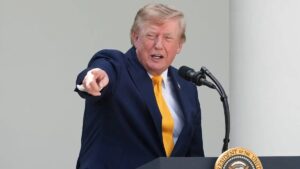
In his first comment, Trump blamed “two far-left judges,” considering that the decision represents an obstruction of his economic and trade policies.
This development comes a week before an expected discussion between Trump and the Chinese President in Beijing about trade tensions between the two countries, at a time when customs duties remain one of the most prominent tools of mutual pressure between Washington and Beijing.
The ruling also paves the way for a new legal battle that may include claims to recover billions of dollars in customs duties collected over the past months.
Customs duties are one of the main pillars of Trump’s economic policy, as he has repeatedly used them as a pressure card against China and a number of trading partners, under the slogan of reducing the trade deficit and strengthening American industry.