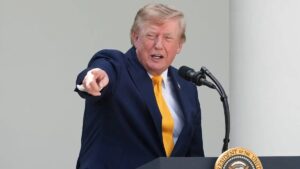
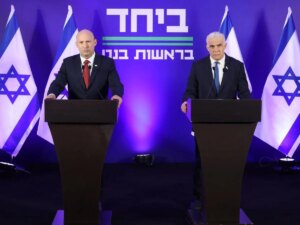
Israeli media quoted Benjamin Netanyahu as saying that US President Donald Trump believes that economic pressure on Iran could lead to “the extraction of nuclear materials,” in reference to pushing Tehran to make concessions in this file.
According to these statements, Trump believes that the policy of pressure, especially through sanctions and blockades, represents an effective tool to force Iran to change its behavior, without resorting to direct military confrontation.
Netanyahu indicated, according to the Israeli media, that the Iranian regime “has become weaker than ever” after the recent developments, while he considered that Israel has become “stronger than ever,” while acknowledging the continued existence of existing challenges, in a reading of the results of the recent confrontation that witnessed mutual military and economic pressure between Washington and Tehran.
These statements come in light of the continued naval blockade and US sanctions on Iran, which aim to reduce its ability to export oil, the main source of its revenues, in conjunction with the faltering negotiations over the Iranian nuclear program, at a time when Tehran is adhering to its conditions, while Washington continues its “maximum pressure” policy.
Observers believe that talk about “extracting nuclear materials” reflects an American tendency to use economic pressure as an alternative to the military option, while keeping this option on the table in the event that the diplomatic path fails.
On the other hand, Iran warns of the repercussions of continuing these pressures, stressing that any escalation may lead to unexpected responses in the region.
Netanyahu’s statements reveal the overlapping of American and Israeli calculations in dealing with the Iranian file, as economic pressure is seen as a main tool at the current stage, in light of the continuing stalemate over whether this strategy will lead to an agreement or to a new phase of escalation.
In a related context, Israeli media quoted Netanyahu as saying that the issue of “demilitarizing Hamas and the Gaza Strip falls upon Israel,” referring to the continuation of the military and security approach in dealing with the Gaza Strip.
These statements reflect the Israeli government’s commitment to the goal of reducing the military capabilities of the factions in Gaza, within a broader vision to reshape the security reality in the region, in light of the complexities of the field and humanitarian scene.