In a striking indication of the course of the confrontation between Washington and Tehran, the US administration practically announced the end of hostilities, at a time when indirect military measures continue, which reflects the complexity of the stage between the declared calm and the disguised escalation.
A senior official in the administration of US President Donald Trump said on Thursday evening that hostilities between the United States and Iran have “ended,” explaining that this comes within the context of the “War Powers” Law, which sets the time frame and legal mechanisms for the use of military force.
The official added that the two parties agreed to a two-week ceasefire that began on Tuesday, April 7, and was later extended, noting that “there has been no exchange of fire between the American armed forces and Iran since that date.”
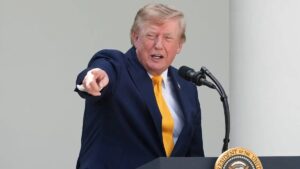
In parallel, Trump confirmed in an interview with Newsmax that the war led by his country against Iran “has effectively ended,” but he stressed his desire to achieve “a victory with a greater margin,” saying: “We have already won the war, but I want an even greater victory.”
These statements came days after US Defense Secretary Pete Hegseth announced the continuation of the naval blockade on Iranian ports “as long as necessary,” while expanding the scope of operations to include the Indian and Pacific Oceans, in a move that reflects continued military pressure despite talk of the end of direct fighting.
On the other hand, the Chairman of the Joint Chiefs of Staff at the Pentagon, General Dan Kean, acknowledged that some of Iran’s fast combat boats are still in service, despite previous claims that Iran’s naval capabilities have been completely destroyed, which highlights a gap between official rhetoric and field reality.
Media reports also indicated that the optimistic picture presented by Pentagon leaders to President Trump may not fully reflect the operational data on the ground, in light of the continuing military challenges.
The roots of the escalation go back to February 28, 2026, when the United States and Israel began carrying out strikes on targets inside Iranian territory, which led to the death of more than 3,375 people, according to Iranian data.
On April 8, Washington and Tehran announced a two-week Pakistani-brokered ceasefire, but the ensuing negotiations in Islamabad, with the participation of Vice President J.D. Vance, Special Envoy Steve Witkoff, and Jared Kushner, ended without reaching a final agreement.
Although the resumption of major combat operations was not announced, the United States continued to tighten the naval blockade, as the US Central Command (Centcom) reported that 44 commercial ships had been directed to return or change their course as of Friday, as part of a blockade that officials described as “relentless” since April 13.
These developments reflect a gray phase in the conflict, where direct military operations decline in favor of other pressure tools, in the absence of a clear political settlement, which keeps the region on the brink of escalation that could ignite at any moment.