“Lebanon Debate” – Political Editor
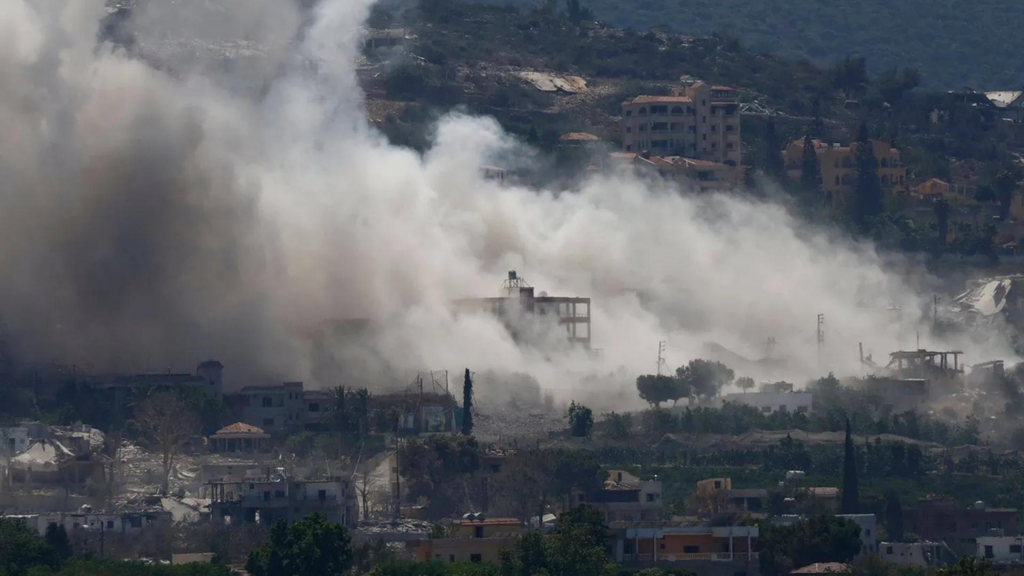
Lebanon cannot avoid engaging in negotiations with Israel, to deter the Israeli aggression that is besieging the south and threatening all of Lebanon with war, despite the formal truce extended by the United States until the middle of this month of May. The alternative to this negotiation is destructive Israeli scenarios that Israel is threatening, and Lebanon seeks to correct them and banish their specter.
However, the problem of the negotiations goes beyond mere acceptance or rejection, and touches on the essence of the state’s ability to manage this path effectively and responsibly, according to the political writer in Washington, Wissam Yafi, who confirms that the state seeks to establish itself as a party capable of taking steps towards sustaining peace, instead of remaining in the cycle of recurring wars. He reveals to “Lebanon Debate” that this trend constitutes a basic motivation for engaging in negotiations, but the problem does not lie in the intention itself, but rather in the method and extent of implementation. The interior is in harmony with these steps.
In fact, Yafi does not deny that the state is trying to make firm decisions, but it is facing clear internal obstacles, most notably the lack of consensus. Steps such as dealing with the Iranian ambassador and deeming him “unwanted,” or the decision to ban Hezbollah weapons, were not implemented in practice, which led to a decline in confidence in the state and its institutions. What is more dangerous than that is that when the state commits itself to an external party to pledges that it cannot implement, it places itself in a weak position, and reproduces previous failed experiences such as the May 17 agreement.
It was supposed, according to Yafi, that in light of these challenges, state institutions would be resorted to, for example, the House of Representatives, to hold an official session to discuss the issue of negotiations in a transparent manner, and to make a clear decision to approve or reject, which would secure the required national consensus, or at least clearly define responsibilities. In the absence of this consensus, any “major decision related to peace will remain fragile and vulnerable to failure in implementation, which will reflect negatively on the state’s image and seriousness.”
Regarding whether negotiation is a “trap” for Lebanon, Yaffe does not believe that the answer is simple, as a distinction must be made between peace as an idea, and peace with the current Israeli government. In the event that there is a government that is not so extremist, the chances of achieving peace may be greater. However, under an extreme right-wing government, like the current government that is unlike any governments in the history of Israel, the chances for peace become very slim, if not non-existent, because the conditions that these governments may present are difficult, or even almost impossible, for Lebanese acceptance, for example. For example, Israel may demand to remain in the areas it occupied in the south, or to keep them demilitarized and devoid of residents, and it has already announced its intention to remain south of the Litani.
On the other hand, Yafi focuses on the Israeli “trap”, by asking Lebanon to make major concessions, which will put the Lebanese negotiator before a complex equation between acceptance that is not possible and rejection that may be used against him, as the real trap will be if Lebanon rejects these conditions, as Israel will seek to portray it as a party that rejects peace, as it did previously with the Palestinians, where a narrative contrary to reality was promoted, and this scenario is not hypothetical, but rather based on previous experiences.
What increases the complexity of the scene, in Yaffe’s opinion, is that Lebanon has not, so far, taken serious preliminary steps before entering into negotiations, while the Israeli side has actually begun to impose facts on the ground, such as drawing the yellow line extending to the sea, which includes the Qana gas field, which means that it has begun negotiating before it officially launches, and here the Washington meeting stands out, for example, which in itself is considered a “Lebanese concession,” especially since it was not met with any Israeli concession, such as stopping the destruction of homes in the south, and Lebanon did not demand anything. On the other hand, this is a strategic mistake.
The most dangerous thing in this context, Yaffe continues, is that Lebanon has made concessions in advance, such as accepting direct negotiations, without forces to support it, such as France and Saudi Arabia, which may open the door to additional Israeli demands, such as calling for a meeting between the President of the Republic, Joseph Aoun, and Benjamin Netanyahu, and despite the President of the Republic’s refusal to meet before the end of the negotiations and reaching a clear understanding, which is a position he takes credit for, it is “not enough in light of the multiple pressures.”
On the other hand, Israel follows a negotiating approach based on raising the ceiling of demands and putting the other party under pressure, while Lebanon appears as if it is in the position of the recipient, not the initiator, which raises a legitimate question from Yafi, which is, “Why does Lebanon not use the power cards it possesses, despite its weakness?”
In fact, Yaffe believes that “Lebanon’s weakness may be a source of strength, if it is used well. It can, for example, require obtaining prior international support before entering into any negotiations, or before making any concession. It can also use legal tools, such as filing international lawsuits against Israel for damages in the south, to turn them into pressure cards at the negotiating table.”
Negotiations, in essence, do not begin when you sit at the table, and do not end when you leave, according to Yafi, who explains that they are an ongoing process that requires careful preparation, a clear strategy, and internal cohesion, while so far, it seems that Lebanon has not succeeded in investing in these elements in the desired manner, and therefore, the danger does not lie in peace itself, but in the way in which this path is managed, especially since “entering into negotiations without internal unity, without possessing the ability to implement, and without possessing a clear strategy, may turn peace from an opportunity into a trap.” Real.”