In a dangerous development with military and economic dimensions, the implementation of the United States’ decision to impose a naval blockade on Iran has begun, amid uncertainty surrounding the implementation mechanisms and the possibilities of escalation in the Strait of Hormuz, one of the most important oil corridors in the world.
According to a report by journalist John Ismay in The New York Times, this blockade announced on Monday lacks similar precedents in recent decades, while the American military establishment has revealed little information about how it will be implemented on the ground, which opens the door to multiple possibilities based on previous experiences in the region.
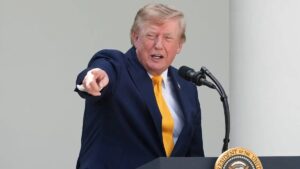
On Sunday, US President Donald Trump announced an order to impose a blockade on Iran and the Strait of Hormuz, which is the narrow waterway that separates the Arabian Gulf from the Gulf of Oman, and is considered a vital artery for transporting a large portion of the world’s oil. But the next day, US Central Command (CENTCOM) quickly reduced the scope of the operation, explaining that the goal was to prevent commercial ships from entering or leaving Iranian ports.
In an official statement, the leadership confirmed that the blockade will be applied “neutrally to the ships of all countries,” and will target Iranian ports on both sides of the strait, noting that the implementation details are still “under development.” Official statements did not clarify the fate of ships that might try to break the blockade.
In practice, it is estimated that the US Navy may use destroyers to monitor ship movements via radar, but the length of Iran’s southern coast makes this option expensive in terms of military deployment. The proposed alternative is to station warships on both sides of the Strait of Hormuz, supported by drones to monitor the ports.
If a ship considered a “target of interest” is spotted, a destroyer is sent to intercept it, where a call is made via marine radios to inquire about its destination, cargo, and number of crew members, before requesting permission for an inspection team to board it. Ideally, the ship would comply with these procedures, but a more serious scenario would be to ignore orders and attempt to escape.
The process of boarding ships may take place via small boats using ladders, but difficult sea conditions may prompt the use of helicopters, where soldiers descend via special ropes, a technology that has proven effective in previous operations, especially in intercepting Venezuelan oil tankers in the Caribbean Sea.
Although these operations seem technical, their cost is high, as the detention of oil tankers has previously cost tens of millions of dollars, under legal restrictions that prevent the sale of their cargo without judicial permission.
The American experience in the Gulf is not new, as it dates back to after the Gulf War in 1991, when the US Navy intercepted Iraqi oil tankers as part of the “oil for food” program. The majority of these operations were “cooperative”, with ships adhering to procedures and being herded into holding areas before their cargo was sold.
As for the comprehensive blockade, the last similar experience dates back to 1962 during the Cuban missile crisis, when Washington imposed a “sea quarantine” on Cuba, in a move that was considered at the time an act of war under international law.
In the current context, the blockade imposed on Iran varies in size and complexity, as it goes beyond targeting specific shipments to affect shipping traffic towards an entire country, which places the region before a careful test of military and economic balances, especially in light of the sensitivity of the Strait of Hormuz to global energy markets and its potential effects on Lebanon and the region.