In light of the widespread protests that Iran has been witnessing for weeks, a fundamental question emerges in regional and international discussions: What will the Iranian and Middle Eastern landscape look like if the ruling Iranian regime falls? Will this lead to a radical change in Tehran’s internal and external policies, or will the change be gradual and limited?
This question was the focus of an extensive report published by the Israeli channel N12, prepared by journalist “Yogev Carmel,” which dealt with the repercussions of the escalating protests inside Iran, the possibilities of the regime’s collapse, and the impact of that on regional security, energy, and the nuclear program issues.
“This suffocation that has accumulated for years has turned into a cry,” says “Sajjad,” a resident of the Iranian city of Mashhad, in his interview with the channel. He adds: “Nothing scares me more than living under the shadow of this government. We are no longer afraid of anything else.” “Sajjad’s” testimony, according to the report, reflects the accumulated anger of a large segment of Iranians who took to the streets in more than 200 cities, in one of the largest waves of protest since the establishment of the Islamic Republic in 1979, amid dozens of deaths and the arrest of more than 1,000 people.
In Israel, political and security circles are following these developments with great caution. N12 indicates that Israeli security assessments believe that the possibility of the fall of the ruling Iranian regime in the near term remains limited, despite the expansion of the scope of the protests, due to the continued loyalty of the “Basij” forces, a paramilitary force affiliated with the Iranian Revolutionary Guard that is used to suppress internal movements.
Dr. “Shaul Yanai,” a researcher at the “Regional Thinking Forum” and a lecturer in political science at the University of Haifa, Israel, believes that Iran has failed over the past two decades to achieve its regional project. He says: “Iran has tried to build political, military and religious hegemony in the Middle East, but it has failed. Today, a large part of the Iranian people are asking: We spent enormous amounts of money outside our borders, while we neglected the inside, so what did we gain in the end?”
For her part, “Helit Barel,” the former director of the Israeli National Security Council, an advisory body affiliated with the Prime Minister’s Office, believes that the fall of the regime – if it happens – will not automatically lead to a radical change in the international system. She explains: “Russia and China may lose an important partner, but that does not mean a reversal in their policies. It also cannot be assumed that the Iranian nuclear program will disappear quickly, as it is a national project in which huge resources have been invested for decades, and has become part of the concept of sovereignty among segments inside Iran.”
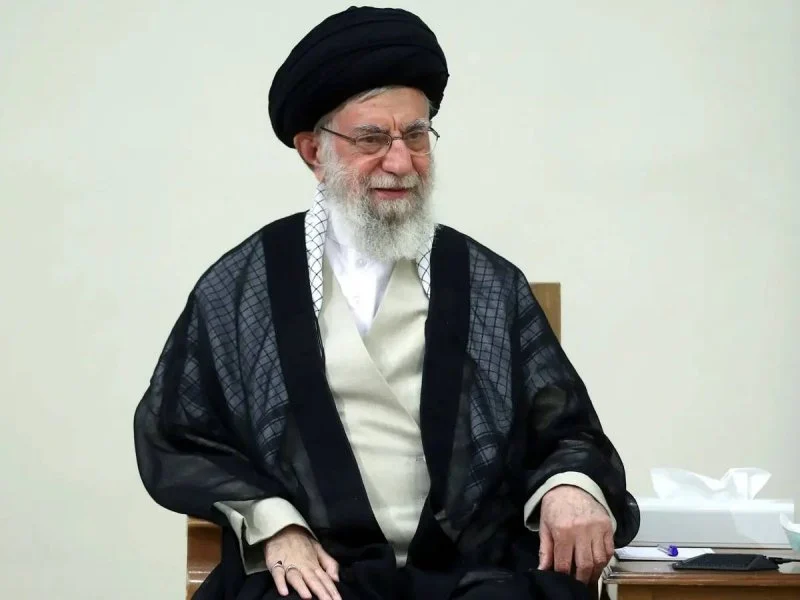
In addition to the protests, the channel indicates that the ruling Iranian regime is seeking to demonstrate its strength through military maneuvers and missile tests, in a message directed to the inside and outside, especially to Israel and the United States, to deter them from exploiting the state of internal unrest. However, N12 quotes Western media, including the “New York Times,” that Iranian officials describe the current situation as a “survival situation,” while the British “Times” newspaper reported that the Supreme Leader “Ali Khamenei,” 86 years old, is considering a scenario of fleeing to Russia in the event of a worsening situation.
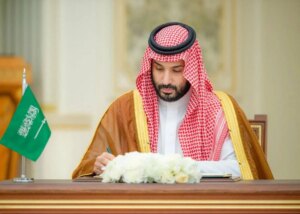
Regionally, the report believes that any decline in the Iranian role may pave the way for major transformations in the Middle East. Dr. “Yanai” explains that Iran is one of the most prominent obstacles to regional stability and development projects, such as the vision put forward by Saudi Crown Prince “Mohammed bin Salman” to establish a stable economic space extending from North Africa to the Gulf. He adds: “As long as the Iranian threat remains, investments are directed towards security and armament instead of the economy. And if this threat disappears, the region can move to a stage of reconstruction and development, from Yemen and Syria to Lebanon and Iraq.”
Economically, the N12 channel report deals with the potential impact on energy markets. Dr. “Amit Mor,” a professor at Reichman University in Israel, a private university specializing in economic and strategic studies, and the CEO of an energy consulting firm, points out that Iran currently produces about 4 million barrels of oil per day, or about 5% of global production, but it has much larger reserves and production capabilities. He says: “Iran without sanctions can become a pivotal player in the global energy market, not only in oil but also in gas, as it has the second largest gas reserve in the world after Russia.”
In contrast, “Mor” warns against expecting a sharp drop in oil prices, explaining that increasing production may ease the pressure on prices but will not lead to a significant decline, nor will it hinder the global transition to renewable energy.
As for the nuclear program, the channel indicates that there is a relative consensus among experts that abandoning it will be slow and complex. “Barel” explains that “nuclear and missiles have become symbols of national sovereignty in the Iranian consciousness,” which makes any concession in this area gradual and conditional, and may be limited initially to returning to negotiations or reducing the level of enrichment, without completely abandoning the program.
The N12 channel report, by “Yogev Carmel,” concludes that the fall of the ruling Iranian regime – if it is achieved – will not be an immediate end to the region’s crises, but it may constitute a historical turning point that opens the door to a different path, less escalatory and more focused on development, even if this path is long and full of challenges.