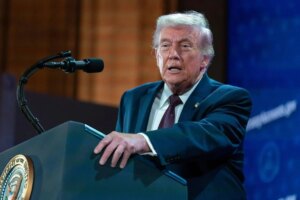
The United States and Iran are close to reaching an agreement that may end the war that has been ongoing for about 3 months, amid intense diplomatic movements and regional contacts conducted by US President Donald Trump with a number of Middle Eastern and Asian leaders.
Sources confirmed to “Fox News” that Trump had “a very positive conversation with Middle Eastern leaders,” while the “Axios” website explained that the US President held a joint call with the leaders of Saudi Arabia, the Emirates, Qatar, Egypt, Turkey, and Pakistan, as a number of them urged him to proceed with the agreement with Tehran and avoid a return to military escalation.
The website quoted an informed American official that the Trump administration and Iran are “very close” to an agreement to end the war, noting that the remaining differences are currently focused on “formulating” some technical and political points.
But the official stressed at the same time that Trump “has not yet made a final decision,” explaining that the US President is still studying the options presented, including resuming military strikes if negotiations fail.
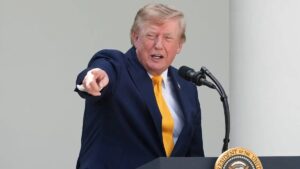
Trump had said in previous statements that the chances of reaching an agreement or returning to war were “equal,” adding that he would meet with his negotiating team before making the final decision.
He also indicated that the United States wants an agreement that prevents Iran from possessing a nuclear weapon and guarantees the security of navigation in the Strait of Hormuz.
According to Axios, Trump is expected to make a call with Israeli Prime Minister Benjamin Netanyahu to discuss developments in the negotiations, while Vice President J.D. Vance and Defense Minister Pete Hegseth were summoned to Washington to hold urgent meetings regarding the Iranian file.
In parallel with the American moves, Pakistani Army Commander Asim Munir left Tehran after meetings with Iranian officials as part of mediation efforts led by Pakistan and Qatar to bring views closer between Washington and Tehran.
Pakistan confirmed that there was “encouraging progress towards a final understanding,” while reports indicated that the new draft being reviewed by Trump emerged from the recent Iranian-Pakistani talks.
Informed sources spoke of preparing a memorandum of understanding that includes stopping the war, gradually reopening the Strait of Hormuz, lifting the American blockade, and releasing frozen Iranian funds.
Despite the positive atmosphere, basic issues remain outstanding, most notably the Iranian nuclear program, the mechanism for lifting sanctions, and restarting full navigation in the Strait of Hormuz.
An Iranian source had confirmed to Al Arabiya that Tehran is “open to ending the war,” but is demanding that Washington show similar seriousness and provide clear guarantees regarding the frozen funds and oil sanctions.
A senior source also revealed to Al Arabiya that there is already a draft agreement ready, but it is still awaiting final approval from both parties.
These developments come amid increasing pressure on the Trump administration due to the continuing war and rising oil and fuel prices, in addition to fears of prolonged turmoil in global energy markets.
The Strait of Hormuz is one of the most prominent points of contention, as about 20% of global oil trade passes through it, while Washington seeks to ensure its complete reopening to international navigation without fees or restrictions.
Observers believe that the coming hours may be decisive in determining whether the region is heading towards a historic agreement to stop the war, or towards a new round of military escalation.