Months after Iran used the Strait of Hormuz as a central pressure card in the confrontation with the United States, Washington says it has succeeded in turning the equation within one of the most important energy sea lanes in the world, benefiting from mine clearance operations, air attacks and a naval blockade, at a time when Tehran is showing a renewed interest in returning to a negotiating path under the weight of military and economic pressure.
According to a report by journalist Barak Ravid on the Israeli “N12” channel, the Strait of Hormuz has been the strongest card in Iran’s hand since the outbreak of the war at the end of February, but American officials say that the American army has worked over the past two months to continuously reduce this influence.
The importance of the development, according to the report, lies in the fact that the war that began six months ago with the aim of striking Iran’s missile capabilities and destroying the remainder of its nuclear program has turned into an open conflict with no end date over the world’s most important bottleneck in the field of energy.
American officials believe that they have succeeded in “reversing the trend” in the Strait, considering that this stage may constitute a decisive moment in the war, not only leading to a gradual easing of pressure on the global economy, but it may also give Washington an opportunity to reach a better agreement with Iran.
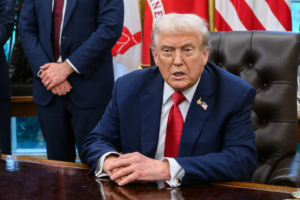
US President Donald Trump said in an exclusive phone call with “N12”: “This matter is open. The Iranian response is very moderate. They do not want us to attack them again. This is the whole story. Everything else does not matter.”
When the war began, the Strait of Hormuz was open and oil shipments were flowing unimpeded into global energy markets, while the price of a barrel of Brent crude reached about $72.
But Israeli officials said that the move to close the strait began at the initiative of the Commander of the Naval Force of the Iranian Revolutionary Guard at the time, General Ali Reza Tengsiri.
During the first 72 hours of the war, Iran announced the closure of the strait and warned that it would attack tankers trying to cross it.
According to Israeli and American officials, behind the scenes, Tungsiri issued an order that led to a major escalation, requiring the planting of sea mines within the Traffic Separation Route known as “TSS,” which is the main international sea lane that passes through the strait.
Three weeks later, Tangsiri was killed in an Israeli air strike targeting Bandar Abbas in Iran.
Iranian attacks on ships and the threat of mines led to an almost complete cessation of commercial shipping traffic.
Over the next two months, oil prices jumped, and the price of a barrel of Brent reached its peak at $126.
On April 8, Trump agreed to a ceasefire, and the rise in fuel prices in the United States and pressure on energy markets were among the reasons that prompted him to do so, which is precisely the economic impact that Iran was seeking to achieve.
The reopening of the Strait formed the cornerstone of the memorandum of understanding between the United States and Iran that was signed two months later.
But the strait was not fully opened as agreed, and the memorandum collapsed shortly after.
After the fall of the memorandum of understanding, the US army began working to reopen the Strait unilaterally.
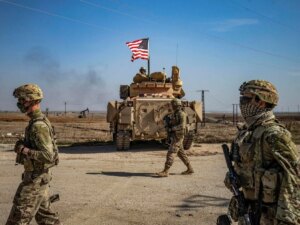
The operation included several paths, as a joint American force, in cooperation with the UAE, began accompanying ships through the southern route of the Strait while providing air cover and intercepting Iranian attacks using drones and cruise missiles.
The United States also launched an air campaign that lasted two weeks, during which hundreds of raids were carried out, which, according to the report, caused significant damage to the Revolutionary Guard’s ability to target ships passing through the strait.
In parallel, a large mine-clearing operation was launched in which US Navy divers and members of the “Sea Lions” unit participated, in addition to unmanned vehicles operating underwater and others on its surface, including the vehicle that rescued an American “Apache” helicopter pilot months ago, along with ships belonging to private contractors, with the aim of discovering and neutralizing mines.
The United States also re-imposed a naval blockade on Iranian ports.
Although the number of ships crossing the Strait and the amount of oil exported through it are still far below pre-war levels, American officials say that the situation on the ground has improved significantly, and that Iran has lost a large part of its control over the Strait, while the US Army practically controls most of its path.
Iran is still firing towards ships, but its ability to hit them accurately has become limited, according to a US official who said that only 2% of the ships that crossed the strait during the past month were hit.
More than 200 objects suspected to be mines were also removed from the main path in the strait.
American officials say that only 11 of these objects were actual mines, and that only a small number of them were properly planted by Iran.
In recent weeks, movement through the southern route has increased to between 20 and 30 tankers each night, transporting an average of between 9 and 10 million barrels, according to American officials, which is equivalent to about half the volume of movement before the war.
Commander of US Central Command “Centcom” Admiral Brad Cooper said: “We have achieved an important milestone in the Strait of Hormuz. The internationally recognized sea lanes in the strait have become free of Iranian naval mines. The conclusion is that the international lanes are open today and momentum is increasing.”
But experts in oil markets and entities that track tanker movements doubt that the actual numbers are that high, while American officials say that these entities underestimate the volume of real movement.
Also, periodic reports of oil tankers being hit by missiles still raise question marks about the safety of commercial navigation within the strait, despite American statements.
In the broader picture, the US-led oil export process is showing signs of gaining additional momentum.
The UAE, Bahrain, and Kuwait have joined this process, while Saudi Arabia is expected to join as well.
American officials hope that Qatar will soon begin transporting liquefied natural gas tankers through the route protected by the United States.
By mid-September, Washington hopes to expand the main route through the strait, allowing at least 50 ships to enter and exit the Gulf each night.
The goal is to reach between 60% and 70% of the volume of oil exports that were recorded before the war.
On the other hand, two sources in the region said that Iran has shown a renewed interest in negotiations in recent days.
The Pakistani army chief visited Tehran on Sunday in an attempt to revive mediation between the United States and Iran.
Later in the week, the Omani Foreign Minister arrived in Tehran to discuss the situation in the Strait of Hormuz.
On Thursday, the Qatari Prime Minister, who is considered a key mediator between Iran and the United States, arrived in Tehran to hold talks at the Iranian request, according to the two sources.
At the public level, Iran still adheres to the same positions, demanding that the United States implement the memorandum of understanding, and also sets conditions for the full reopening of the Strait.
On the other hand, Trump currently says that he is not interested in negotiating with Iran.
He wrote on the Truth Social platform on Thursday: “I don’t want to meet them, they want to. In fact, they are begging to make a deal.”
However, White House envoy Steve Witkoff is still holding talks with the Qataris and other mediators.
American negotiators want to know whether the American blockade, the economic pressure campaign, and Washington’s growing influence inside the Strait will push Iran to soften its positions.
American officials believe that the shift in the situation inside the Strait of Hormuz gives the Trump administration a stronger negotiating position in any future talks with Iran.
They also consider that the memorandum of understanding signed on June 17, which focused among other things on Hormuz, is no longer a relevant document at the current stage.
As for the talks between Oman and Iran about new arrangements for managing the Strait, American officials are treating them, according to the report, as mere “background noise.”
Thus, the battle of Hormuz turns from an Iranian pressure card into an arena that Washington says now holds most of the keys, while the question remains whether American military and economic control will actually lead to a new agreement, or to a more difficult round of confrontation.