“RED TV”
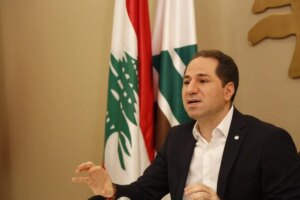
Economist Dr. Mazen Jabri believed that the Lebanese economy has entered a different phase today than the one it was experiencing in 2025, considering that the equations have changed since the start of the war, and that the country is currently facing an economic scene that does not show signs of growth, but at the same time it does not reflect a state of comprehensive collapse, in light of a contraction of 6.4%.
During an interview on the “3:15 Economy” program on RED TV, Jabri explained that the Lebanese economy recorded a growth of 4.2% in 2025, before circumstances and equations changed later, indicating that the economy is still resisting to this day thanks to expatriate remittances that contribute, to some extent, to reviving the economic movement.
He pointed out that the severity of the economic crisis began in 2019 and reached its peak in 2022, but its severity today has become less, despite the continuing worrying indicators related to poverty, unemployment, and migration.
Jabri pointed out that all sectors in Lebanon were affected as a result of the crisis, but the tourism sector was among the most affected as a service sector, while the banking sector is still in a state of collapse.
He added that the activity of the banking sector is distributed among the various economic sectors in Lebanon, which makes the impact of its crisis extend to the entire economic movement.
Regarding the factors that still support the economy, Jabri stressed that consumption and remittances from expatriates constitute, so far, the most prominent elements of reviving the economic movement. However, he warned that high consumption means, in return, increased imports from abroad, which has a negative impact on the balance of payments.
He touched on the movement of expatriates to Lebanon, noting that a number of Iraqis came to the country and obtained important certificates.
In describing the nature of economic transformations, Jabri said that “the only constant in the economy is change,” stressing that Lebanon is a small and geographically weak country, and that this reality is naturally reflected in its economy.
He also warned of the repercussions of inflation on daily life, considering that it reflects negatively on various aspects of living, and has led to a decline in citizens’ purchasing power.
Thus, Jabri places the Lebanese economic scene between a continuing ability to withstand due to remittances and consumption, and structural challenges that continue to put pressure on the basic sectors, most notably banking and tourism, while indicators of poverty, unemployment, immigration, and inflation remain heavy elements in determining the course of the next stage.