Israel revealed intelligence information that it said showed Turkey’s intention to significantly expand its military presence inside Syria, considering that the move crossed a “red line” and violated previous understandings regarding stabilizing the status quo, at a time when Tel Aviv confirms that it does not seek escalation with Ankara or Damascus, and expresses its readiness to resume direct dialogue with the Syrian side.
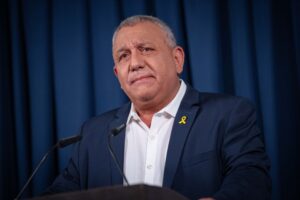
According to a report by journalist Idan Kohler on the Israeli “Walla” website, Israel’s ambassador to the United States, Yechiel Laiter, said, “Israel received clear intelligence information indicating that Turkey intends to significantly expand its military presence in Syria.”
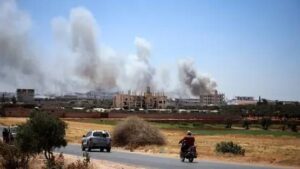
Leiter’s statements came against the backdrop of the Israeli raid carried out earlier this week, when Israeli fighter jets dropped at least 8 bombs on the runways and hangars of a Syrian air base located about 72 kilometers from the Turkish border.
Leiter said: “Israel is not interested in escalation with Turkey or Syria, but a red line has been crossed. This was a Turkish step that flagrantly violated the understandings that stipulate the preservation of the status quo in Syria.”
He added: “The parties that were supposed to be informed of the intelligence information obtained it. We explained that the matter constituted a violation of the understandings, and therefore Israel was forced to take action.”
The Israeli ambassador confirmed that “Israel is certainly open to dialogue with Ankara, but according to statements by state officials, it seems that they would have preferred to wipe us off the map.”
Leiter pointed out that the Turkish move, according to the Israeli narrative, contradicts understandings reached during the administration of former US President Joe Biden between Israel and the administration of Syrian President Ahmed al-Sharaa, which aimed to stabilize the status quo inside Syria.
Leiter touched on the course of those understandings, explaining that they were “reaffirmed during a meeting in Paris last January, in which I participated alongside Syrian Foreign Minister Asaad al-Shaibani, the American envoy to Syria Tom Barrack, the head of the Israeli National Security Council at the time, Gil Reich, as well as the former military secretary to Prime Minister Benjamin Netanyahu, who today holds the position of head of the Mossad, Roman Goffman.”
He added that Israel “only controls about 78 square miles inside Syria, within a security zone aimed at protecting our borders,” while he accused Turkey of having carried out in recent years “a creeping annexation of about 3,500 square miles in northern Syria, equivalent to a full 5% of the country’s area.”
He stressed that “the US administration’s policy, in light of this, is based on freezing the situation that was previously agreed upon.”
The Israeli ambassador said that the assessment in Israel is that the Syrians are not interested in entering into a confrontation with it, noting at the same time that there is “more than one indication” that the step that Turkey was planning was imposed on the Syrians.
Leiter considered it “surprising” that Turkey had denied the presence of a Turkish military delegation in Syria days before the raid, even though Syrian Foreign Minister Asaad Al-Shaibani had confirmed, according to him, the presence of this delegation.
The Israeli ambassador concluded his speech by expressing his hope that negotiations with Syria could be resumed, saying: “We can continue direct dialogue face to face, as we did with them in the past.”
These statements come in light of the continuing debate between Israel on the one hand, and Syria and Turkey on the other, regarding the nature of Turkish activity at the Abu Al-Duhur base in northwestern Syria.
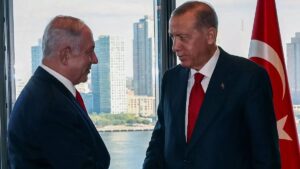
Israeli Defense Minister Israel Katz had previously sent a strongly worded message to Turkish President Recep Tayyip Erdogan through his account on the “X” platform, in which he said: “Erdogan is dragging Turkey into dangerous adventures in Syria. Israel will not allow any party to threaten its security.”
Katz added: “It is better for Erdogan to continue making his empty and imaginary speeches against Israel in the Turkish Parliament, and not to test Israel’s determination to defend itself.”
On the other hand, Syria and Turkey rejected the Israeli narrative that the raid on the air base aimed to prevent a Turkish military base.
Syrian Foreign Minister Asaad Al-Shaibani said in an interview with the Axios website that his government informed Israel before carrying out the raid that there was no Turkish military position inside the base, but Israel nevertheless chose to carry out the operation.
In turn, the Turkish Ministry of Defense issued a statement denying the presence of a Turkish military delegation inside the base during the Israeli raid or before its implementation.
The Turkish statement said: “We will continue to support Syria in its efforts to develop its military capabilities and infrastructure.”
The ministry added: “Israel must stop its reckless attacks and work in accordance with international law for peace in Syria and the region.”
She continued: “We will resolutely continue our efforts and contributions to defending Syria’s sovereignty and territorial integrity, and achieving a stable and secure structure.”
Earlier this week, Israeli fighter jets dropped at least 8 bombs on the runways and hangars of the Syrian base, located about 72 kilometers from the Turkish border.
Following the raid, Israeli Prime Minister Benjamin Netanyahu posted a video in which he sent a message to Damascus, saying: “Our message was very clear: Don’t do it. I think they did not understand the message well.”
At the same time, US President Donald Trump confirmed to Axios that he had received a briefing on the matter, but he refused to condemn the Israeli operation, saying only: “I can’t talk about that.”
Thus, a military base in northwestern Syria turns into a broader testing point for the balance between Israel and Turkey, while the limits of military deployment and understandings regarding the Syrian situation remain at the heart of a dispute that may determine the course of relations between the parties during the next stage.