“Lebanon Debate”
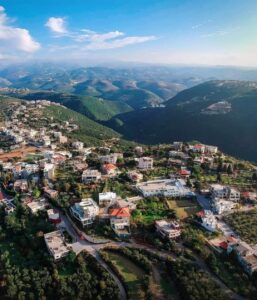
On the agenda of tomorrow’s Cabinet session is a law proposal that aims to replace the name “Baskinta Village” in the Matn District – Mount Lebanon Governorate, with the name “Baskinta City.” This is the proposal submitted by Representative Razi Al-Hajj, amid a legislative process aimed at reclassifying the town in a manner consistent with its population size and development role.
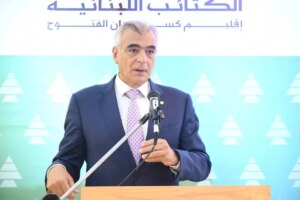
In this context, MP Razi Al-Hajj confirmed, in an interview with “Lebanon Debate,” that “the proposal to classify Baskinta as a city was submitted about three and a half years ago,” explaining that “the administrative and legislative path requires going through several stages before arriving at the final decision.”
He pointed out that “all law proposals submitted by representatives are referred to the government for an opinion on them, and this proposal followed the same path,” pointing out that “the criteria adopted in classifying villages as cities are based on a group of factors, most notably the number of residents, as every village with a population exceeding three thousand people can be classified as a city.”
Al-Hajj explained, “The Legislation and Consultation Authority approved the proposal, and the Ministry of Interior also expressed its approval of it, especially since Baskinta’s population exceeds ten thousand people, which makes it meet the required conditions.”
Regarding the importance of this classification, he stressed that “transforming Baskinta into a city would open up broader opportunities for it to benefit from grants, loans, and development projects, in addition to giving it greater priority in implementing infrastructure projects and improving public services, including roads, facilities, and development projects,” noting that “the area of Baskinta is about 52 square kilometers.”
Al-Hajj stressed that “this classification will reflect positively on the town in terms of development and services, without affecting its heritage and urban character,” explaining that “Baskinta will remain preserving its traditional identity, while the primary goal is to enhance development opportunities and improve the level of services there.”
Regarding the next stage, he pointed out that “including the proposal on the agenda of the Council of Ministers constitutes an essential step in its path,” explaining that “the government’s opinion will later be referred to the relevant parliamentary committees to complete the research and take the required measures.”
Al-Hajj expressed his hope that “the proposal will receive positive response from the Council of Ministers,” noting that “the proposal had previously been included on the agenda of the National Defense, Interior, and Municipalities Committee, but the head of the committee at the time did not deal with it with the required seriousness, and therefore how to deal with it will be monitored in the next stage, leading to its approval after completing the legal and administrative process.”