In a bleak Israeli reading of the scene in Gaza, Reserve Colonel Hazi Nahmah warned that Hamas continues to strengthen its capabilities inside the Strip, at a time when, according to him, Israel does not have the full ability to know what is entering Gaza, considering that the goals of the war have not been fully achieved, and that resolving the battle requires practical steps, not continued stagnation.
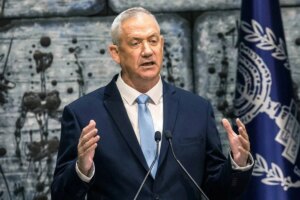
According to an interview conducted by “103FM” radio with Reserve Colonel Hazi Nahmeh, from the Leaders and Reserves Forum, during his conversation with Ron Kaufman and Professor Aryeh Eldad, Israel cannot at the current stage operate with complete freedom inside the Gaza Strip, while “Hamas” continues to strengthen its presence and capabilities.
Nahmah said: “None of the goals of the war have been fully achieved. I think there are very beautiful achievements on all fronts, but there is a feeling of bitterness because of the situation. In the Gaza Strip, Hamas is still in power.”
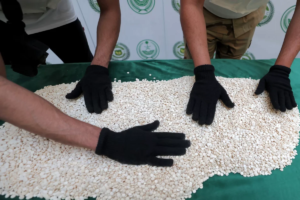
He added that as long as Hamas still controls Gaza, it also controls what enters the Strip, warning that “in the last two months, dozens of drones that can carry up to 150 kg have entered the Gaza Strip.”
He continued: “We have no ability to know what is entering. We only have the ability to estimate what Hamas wants to enter.”
Regarding the possibility that Hamas might turn to a settlement or concession, the former officer said: “I think that if Hamas gives something, it will be something symbolic. Hamas has not lost its desire to return and operate as an armed organization.”
In Nahmah’s opinion, the only way to achieve true victory in Gaza is “to reach Hamas’ resolve,” referring to what he called “the generals’ plan,” which he said was proposed but was not implemented in the end.
He said: “We proposed the generals’ plan through which a solution could be reached,” but at the same time he acknowledged that Israel is working within a reality imposed on it by the international community.
He added: “We are working here within a reality imposed on us by the international community, and within this maze, the solution we proposed is the correct solution: moving the population in the Gaza Strip and closing the water pipeline. I believe that this is the matter that will lead to Hamas’s victory.”
Nahma stressed that he does not seek to make the population thirsty, saying: “I do not want to make the population thirsty. I will give food and water in the area I choose. In the area where there is only Hamas, close the water pipe. With words you cannot reach a solution, with actions you can. Otherwise, you can continue to flounder.”
He later touched on the situation of the Israeli army after the understanding agreement with Lebanon, considering that “the situation of the Israeli army is neither normal nor healthy,” and added: “The situation of the army must be either dynamic in attack or defense, but now the situation is hybrid. We are neither here nor there, in light of the negotiations with Iran.”
Despite his criticism, Nehmeh saw that there is a positive point in the current situation, saying: “The fact that we are in a security zone in which the Israeli army operates freely is an achievement. If the achievement with Lebanon stipulates that we do not leave as long as Hezbollah does not disarm, then there is an achievement here, political and military.”
Nehmeh’s statements reflect the extent of concern within some Israeli circles about Gaza turning into an open arena of attrition, as questions about Israel’s ability to resolve increase as much as clear answers about what is happening inside the Strip decline.