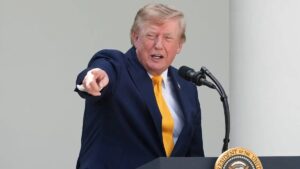
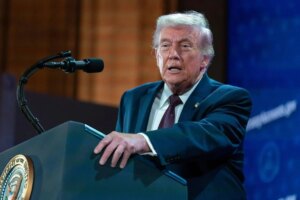
The issue of Iceland’s accession to the European Union has returned to the forefront with force, after the escalating tensions in the Arctic and US President Donald Trump’s threats regarding Greenland imposed a new political reality within the country, which prompted part of Icelandic public opinion to reconsider its strategic options, after long years of insisting on remaining outside the Union in defense of national sovereignty and the marine fishing sector.
According to a report by the New York Times, the discussion about joining the European Union is no longer as marginal as it was before, but has turned into a serious political issue within Iceland, in light of a growing feeling that the security environment in the North Atlantic is no longer what it was, and that complete reliance on the American umbrella has become questionable.
Prime Minister Krystron Frøstadóttir said, “The Greenland crisis hit Icelanders to the core,” noting that foreign policy is now preoccupying voters more than ever before, indicating a clear change in the priorities of the Icelandic street, which used to put economic and living issues at the top of its concerns.
Iceland is heading towards a referendum, which may be held this summer, to consider starting exploratory negotiations with the European Union, provided that the full accession process remains a long process that may take years, if the country actually decides to pursue it.
This shift comes after Trump repeatedly spoke of his desire to “obtain Greenland,” which sparked widespread concern in the North Atlantic, especially since Iceland is the only country in NATO that does not have an army, and has relied for decades on American security protection.
The controversy increased after reports that Billy Long, the candidate for the position of US ambassador to Reykjavik, joked about the possibility of Iceland becoming the “52nd American state,” before he later apologized. Despite the informal nature of this speech, it came at a sensitive moment, deepening fears of a change in the American view of the North Atlantic countries.
Observers believe that concern about the decline in the reliability of American protection has prompted a portion of Icelanders to search for additional “European guarantees,” even though the European Union is not a military alliance. Last March, the European Union and Iceland signed a new defense partnership, in a move seen as an indication of a growing rapprochement between the two parties.
But Iceland’s path towards the European Union is still fraught with major internal obstacles, most notably the fishing sector, which represents one of the pillars of the Icelandic economy and an essential symbol of national sovereignty. Many fishermen fear that joining the union will lead to the imposition of European fishing quotas that will weaken the local sector, as happened in other countries such as Ireland.
Fisherman Helgi Haraldsson told the New York Times that he was inclined to vote against joining out of fear for the future of his profession, adding: “There is a limited amount of fish in the sea.” This phrase reflects the level of sensitivity that the issue raises within a society that sees the sea as an economic and identity resource at the same time.
However, reports indicate that Brussels may be prepared to make special concessions to Iceland on the marine fishing issue, if it decides to proceed with the accession path, in an attempt to alleviate internal concerns and open the door to a settlement that guarantees the interests of the local sector.
On the other hand, the economy is pushing another part of Icelanders to look more positively towards the European Union, as supporters of accession believe that a deeper connection to the European market, and the adoption of the euro instead of the local currency, the krona, may help mitigate price fluctuations and stabilize the economy.
The data contained in the report indicate that inflation in Iceland is about 5.2%, which is nearly double the average inflation in the European Union, at a time when basic commodity prices have risen significantly in recent years, which has strengthened the debate about the feasibility of remaining outside the European system.
In the background of this transformation, Iceland appears to be facing an unprecedented political crossroads: on the one hand, it does not want to compromise its economic sovereignty, especially in the issue of marine fishing, and on the other hand, it finds itself in a more turbulent security environment, as American guarantees no longer seem sufficient for a growing segment of voters. Between sea concerns, Arctic anxiety, and economic pressure, the question of joining the European Union is turning from a postponed idea into an open national debate that may redraw Iceland’s position in the North Atlantic.