The Minister of Economy and Trade, Amer Al-Bassat, confirmed that “Lebanon has been going through an emotional and economic crisis that has accumulated for seven years, which has been exacerbated by the current war,” noting that “the Ministry took the initiative to bring together international donors, most notably the European Union and the World Bank, along with Lebanese public and private institutions, with the aim of coordinating efforts and accelerating support for productive institutions.”
He explained that “small, medium and micro enterprises constitute the backbone of the Lebanese economy, as before the crisis they represented about 95 percent of the total registered enterprises, and contribute approximately 40 percent of the gross domestic product, in addition to providing more than half of the job opportunities in the formal sector.”
He said: “We are meeting today to focus on the segment that is most vulnerable to being affected, but at the same time it is the most important for employment, household income, and the path of economic recovery.”
He added: “Liquidity remains the primary challenge for many institutions, which requires providing operational grants and flexible financing mechanisms to help them continue.”
He pointed out that “the Ministry conducted a survey that included 200 companies, and is currently working in cooperation with the United Nations to launch a broader survey to determine the actual needs of the affected institutions.”
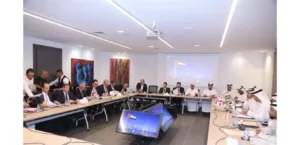
During the meeting, it was revealed that there is a great willingness among donors to support small, medium and micro enterprises and increase the amount of funding available to them, as a number of donors committed to redirecting part of the previously allocated funds towards the most urgent needs of these institutions.
The participants stressed that there are “a large number of entities and institutions ready and able to absorb donor funds and disburse them quickly and effectively.”
The meeting also discussed the possibility of launching joint efforts between the Ministry of Economy and Trade and the Ministry of Social Affairs, allowing the use of the “Aman” mechanism to direct “Cash for Work” projects in a more effective and targeted manner.
Al-Bassat pointed out that “the value of the available support is estimated at approximately $130 million, including grants and loans supported by the World Bank and donor countries, including Norway and Canada,” stressing “the importance of accelerating the access of these programs to the beneficiaries.”
He stressed “the importance of good governance and complete transparency in managing and disbursing these funds, to ensure their proper use and achieving the desired impact,” stressing that “Lebanon cannot afford to lose viable institutions due to the slowness, dispersion, or difficulty of accessing support.”