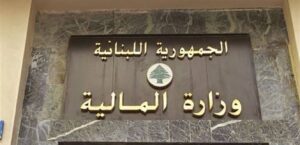
The meeting was attended by representatives of the Presidency of the Council of Ministers, including Lamia Moubayed and Satea Arnaout, and of the Ministry of Finance, Director General of Finance, George Maarawi, and the relevant advisors.
Representatives of the European Union confirmed their readiness to provide comprehensive technical support to the customs sector, especially in light of the recent transformations in governance, especially after the appointment of a new customs administration, which constitutes a real opportunity to launch an effective reform path.
The discussions revolved around several basic topics, most notably:
– Governance and structure: Emphasizing the necessity of having a comprehensive action plan that addresses gaps in procedures, human resources, and equipment
– Risk Management: Reviving the Customs Risk Management Unit and enhancing its capabilities
– Systems modernization: Discussing the stability of the customs information system and the possibility of upgrading it or moving to newer systems
– Border crossings: Allocate resources to develop land and sea crossings and equip them with the necessary equipment.
The European side informed Minister Jaber that the signing of implementation contracts is expected in the coming months, to be preceded by a comprehensive field evaluation phase that ensures that interventions are compatible with actual needs, in addition to the possibility of activating additional support mechanisms through the Flexible Cooperation Facility, in response to emerging requirements.
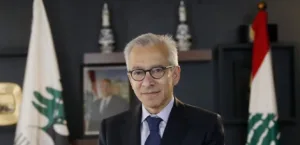
Minister Jaber announced his determination to make it a success and secure everything necessary for this, starting with the integrated strategic vision that combines modernizing the technical infrastructure, developing cadres and controlling procedures. He stressed that work is underway to provide a favorable ground for achieving tangible progress, in light of the presence of a stable government and a new customs administration determined to reform.
Jaber pointed out that customs reform falls within the system of structural economic reforms mentioned in the International Monetary Fund program, especially with regard to restoring customs revenues to their normal levels, noting the possibility of including potential commercial and industrial companies with the European side in the anticipated programs.
At the conclusion of the meeting, it was agreed to continue coordination and consultation in upcoming follow-up meetings, emphasizing that the current moment represents a historic opportunity to bring about a qualitative shift in the Lebanese customs system, provided that there is political will and clear implementation plans.
Customs administration meeting
Minister Jaber then chaired a meeting of the Customs Administration, which included the President of the Supreme Council, Misbah Khalil, Council members Louay Hajj Shehadeh and Charbel Khalil, and the Director General of Customs, Gracia Qazi, during which the steps taken to activate customs work in a way that controls evasion were reviewed, with an emphasis on implementing each of the procedures as a primary source of revenue collected in the current circumstance.
Jaber praised the effort made by the new administration, which recorded a difference in the administration’s work despite the difficult challenges that the country is going through.
Meeting with customs directors in Lebanon and Syria
In a separate area, the Director General of Customs, Gracia Qazi, briefed Minister Jaber and the President and members of the Council in the context of her visit that she made yesterday, Thursday, to Damascus, at the head of a delegation from Customs and a representative of the Lebanese Public Security, and her meeting with the Director General of Customs in the Syrian Arab Republic, Khaled Al-Barrak, where a lengthy meeting was held during which the reality was reviewed at the borders in Jdeidet Yabous and the Lebanese factory, as well as at other common crossings, especially in the north, after Lebanon began reopening its crossings with Syria, which had been exposed. to Israeli attacks.
Qazi said that she had informed the Syrian side of the necessity of canceling the transfer on the Lebanese-Syrian border due to the large congestion it caused in trucks, and she had received a positive Syrian promise. She quoted her counterpart, Khaled Al-Barrak, for his cooperation regarding the necessity of addressing any obstacles that obstruct the movement of movement between Lebanon and Syria, whether for individuals or trucks.
After the visit, Qazi met with Colonel Charbel Estephan, commander of the Sair Chtoura detachment, delegated by the region commander of the Internal Security Forces, Brigadier General Nadim Abdel Masih, to coordinate work in order to address the crisis of truck congestion in the border area at the Masnaa crossing.
Meeting with the Syrian-Lebanese Economic Council
Minister Jaber met with a delegation from the Syrian-Lebanese Economic Council, which included Dr. Laila Al-Samman and Mr. Riaj Obaji, where they discussed in Qatar activating economic relations between Lebanon and Syria and facilitating the exchange of goods and services manufactured in both countries.