“Lebanon Debate”
At a precise time that coincides with major regional transformations and negotiation paths open to wide possibilities, Representative Farid Heikal Al-Khazen sparked a sensitive political debate through an urgent call for an expanded Christian meeting, warning of what he described as “what is secretly whispered” in the political scenes. A call that carried within it indications of growing concern about settlements that might be cooked up far from the Lebanese interior, and that might directly reflect on the balances of the regime and the formula of national partnership.
Al-Khazen, in a tweet that sparked widespread interaction, called for an immediate Christian meeting that includes leaders and wise men, with the aim of forming a follow-up committee similar to the “Lebanese Front,” to keep pace with developments, ensure an effective presence in any future settlement, and defend national rights. This call opened the door to multiple questions: What is really happening behind the scenes? Is Lebanon on the verge of reformulating its political system? To what extent is this movement able to influence the course of events?
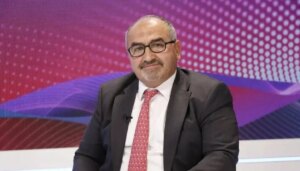
In this interview, Representative Farid Heikal Al-Khazen answers the background of his call, reveals his concerns about the next stage, and also presents his vision of how to protect internal balances in light of accelerating regional changes.
1. What prompted you to issue an urgent call for a Christian meeting at this particular time, and what are the “current developments” that call for this rapid action?
We are living in a very crucial and delicate stage, in which everyone realizes that the Iranian-American negotiations, as a result of the ongoing war on the one hand, and the Lebanese-Israeli negotiations sponsored by the United States on the other hand, are shaping the features of the next stage. We are fully aware that Israel’s position in these negotiations is much stronger than the Lebanese position, given the presence of an American sponsor who tends to sympathize with Israeli demands more than he gives priority to Lebanese demands.
Today, what concerns the United States and Israel with regard to Lebanon is the issue of handing over Hezbollah’s weapons, confining them to the state, or removing them, whatever the name adopted.
In light of this complex map, a search is underway for a mechanism that would allow Hezbollah’s weapons to be handed over to the state, which constitutes a priority for a wide segment of the Lebanese at home.
But the main fear today is that the major players do not prioritize the formula and balances of the current Lebanese political system. Neither the American administration, nor Israel, nor Iran give this file sufficient attention.
Perhaps the only party that adheres to the Lebanese formula and the role of Christians in it is the Kingdom of Saudi Arabia, through its keenness on the Taif Agreement. This is important, but not sufficient to guarantee the current Christian-Islamic balance and the role of each segment within Lebanon.
Lebanon was once the hospital, university, and school of the East. Christians had a major pioneering and cultural role in the Arab world, and they contributed fundamentally to the Arab Renaissance, but this role declined to some extent.
Today, what remains is their presence and influence within the Lebanese state institutions and political administration. Hence, the fear lies that any major settlement would be at the expense of Lebanese internal balances, whether in terms of constitutional powers or advanced positions in power. Therefore, we are vulnerable to being a victim of any major agreement between Iran, the United States, and Israel.
For example, if the Iranian leader and Hezbollah agreed to hand over weapons in exchange for strengthening the influence of the Shiite sect, a sect for which we have the utmost respect and appreciation, and which is an essential component of the country, and in return they asked for broader powers and greater positions within the Lebanese state, this would raise a fundamental question: At whose expense will this compensation be? Will the American side object to that? Probably not. Will Israel refuse? This is not expected to be a priority for her. The Kingdom of Saudi Arabia and the Vatican may be among the parties that may object based on their adherence to the Taif Agreement. But the question remains: Can these parties confront a possible American-Iranian-Israeli understanding?
These are legitimate concerns that force us to think seriously about how to protect the Lebanese formula and the sectarian balances within it in any future settlement.
2. When you referred to “what is secretly whispered,” are you talking about undeclared data or settlements, and are they linked to internal or regional paths that may affect the position of Christians?
I received conversations raised behind the scenes and political salons in some Lebanese parties, and I also had contact with one of the ambassadors of a country concerned with Lebanese affairs, where the idea of reformulating a new social contract in Lebanon was discussed. Hence, the need emerged to call for an emergency Christian meeting so that it could be expanded to the national level.
Knowing that I am known for my openness and belief that Lebanon, without the formula of coexistence, without sectarian pluralism, and in the absence of national unity, becomes vulnerable to disappearance. Therefore, any imbalance in internal balances, whether at the Christian, Sunni, Shiite or Druze level, threatens the entire Lebanese formula.
Our problem today is that we can no longer make any more concessions, after we have reached the bottom, not only at the level of the Taif Agreement, but even more so in practice. Therefore, any additional concession, or loss, so to speak, will put the entire existence and entity at risk.
Hence, it is necessary to rise above all wounds, and put the interest of Lebanon and the Lebanese formula above all considerations.
In this context, I remember historical situations, when President Camille Chamoun shook hands with Sheikh Bashir Gemayel after the events of July 7, transcending the wounds in order to preserve the unity of the situation. I also remember President Suleiman Franjieh when he said his famous speech, “May God forgive what has passed,” transcending his pain.
Whatever the differences, political differences, and competition, they do not amount to what they were in previous stages, and yet leaders, such as Camille Chamoun, Suleiman Franjieh, and Pierre Gemayel, rose above their wounds and differences and met for the benefit of Lebanon.
Accordingly, what is required today is of the leaders, whose keenness and patriotism we do not doubt, and of the wise men and all the elites, to meet and come together to develop a clear vision and an integrated work program for how to keep pace with the developments taking place in Lebanon and the region, which will inevitably be reflected in the Lebanese internal situation.
3. How do you envision the role of this meeting, and the proposed committee after it, in influencing any future settlement, and what are the guarantees that the Christian role will not be marginalized?
We alone cannot determine the role or outcomes of this meeting. What we did was launch a call as an initiative or a cry, to be completed through consultation with the leaders, the church, the elites, and the wise, at the forefront of which are the President of the Republic, His Beatitude Patriarch Al-Rahi, and the heads of the parties. As a result of these consultations, a clear vision must be reached, which can be translated into periodic meetings, leading to the establishment of a permanent and open operations room, given that political changes are accelerating at a rapid pace and with strong dynamism. Wars and the battlefield change daily, and every change produces new political data. Hence, the need emerges for a permanent coordination framework that works to protect Lebanon and the formula of coexistence, which in turn requires internal balance and a fundamental leadership role.
In fact, there are no real guarantees, as the equation is international, regional, and very large. The only guarantee is that the Kingdom of Saudi Arabia and the Gulf states adhere to the Taif Agreement. The second positive signal is internal and lies in the Lebanese’s keenness to preserve the political formula that resulted from the Taif Agreement.
However, this path lacks a unified position and effective internal coordination that could later expand to include broader national coordination, thus establishing a real guarantee. In the absence of that, it does not seem that international players are giving this file the required priority.
4. How will this committee work in practice: Will it be a coordination framework, a decision platform, or a pressure point in the negotiation process?
This committee must be formed as a permanent operations room that follows up on a daily basis the course of the ongoing negotiations between the United States, Israel, and Iran, and also keeps abreast of the Lebanese-Israeli negotiation file on a permanent basis. The committee is developing an action program centered around launching a wide communications network with external and internal positions of influence, and communicating with countries friendly to Lebanon that are interested in preserving Lebanese internal balances, such as the Vatican, France, and others. It is also working to activate the role of Lebanese outreach and lobbyists in influential countries, especially the United States, with the aim of urging the American administration not to accept any settlement that comes at the expense of the current Lebanese formula.
In parallel, an internal work program is being drawn up through an open internal communications network so that a comprehensive national position can be taken on this crucial issue.
5. What are the priorities and files that this committee is supposed to develop to ensure “effective presence” and defend national rights?
The highest priority is to preserve the position of each sect within the Lebanese state, which maintains Islamic-Christian parity, and is reflected through a group of basic constitutional and administrative positions, most notably the presidential, ministerial, parliamentary, diplomatic, judicial and military positions.
These sites do not only express political representation, but rather form part of the structural balance of the Lebanese system, and any violation of them is directly reflected in the formula of national partnership.
6. Who are the political and spiritual forces and authorities whose participation you are counting on, and is there an initial response to this call?
It is still too early to give a final assessment of the level of response, but initial indicators suggest positive interest in some political and media circles, which constitutes a starting point on which to build.
The main bet remains on the involvement of the bulk of the political forces, with their various orientations and affiliations, because this will enhance the effectiveness of the initiative and its ability to achieve its goals. The role of the Presidency of the Republic and the spiritual authorities, most notably the Maronite Church and Patriarch Mar Bechara Boutros Al-Rahi, is essential in providing a comprehensive cover for this path. In addition, the importance of involving intellectual, economic, and expatriate elites cannot be overlooked, because of the influence and ability they have to contribute to formulating an integrated vision, as well as at the level of communication with the outside world.
7. Does this initiative reflect an actual concern about the absence of Christians from the political decision-making process, and what practical steps do you suggest to avoid this?
This initiative reflects a real and justified concern in light of the major transformations taking place, as it is feared that the national role of any of the sects will be marginalized in any future settlement, especially in the absence of a unified position and a single vision. To avoid this, a set of practical steps emerge, the most important of which is unifying the Christian position within a clear vision, strengthening coordination between political forces and spiritual authorities, openness to the rest of the Lebanese components and extending bridges of cooperation with them, adhering to the Taif Agreement as a basic reference for organizing balances, and activating the international presence through Lebanese diaspora relations. In conclusion, protecting the Lebanese formula is an integral part of protecting Lebanon, and it is a national responsibility that requires everyone to come together.