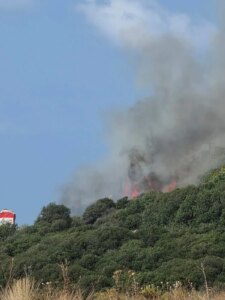
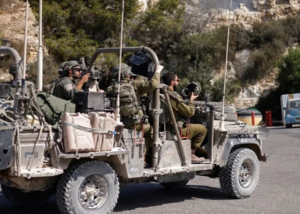
South Lebanon is witnessing an increasing escalation on the ground, as Israel has intensified its ground and air operations from the coast to the interior border villages in an effort to achieve field gains, amid fierce clashes in areas such as Khiam, Deir Saryan, and the vicinity of Bayada. This scene reflects the escalation of the confrontation without a decisive victory being achieved so far.
The western region emerges as a major arena of clashes, as the Israeli army attempted to advance along the coast, benefiting from naval support, but faced severe resistance, especially with its right flank exposed to increasing pressure, and its inability to consolidate any real progress, despite its attempts to control strategic sites such as Labouneh and Bayyada.
The advance towards Al-Bayyada towards Shama was not complete, and the battles witnessed a change in tactics between limited advance and retreat, with ongoing clashes showing the difficulty of converting fire superiority into stable field control, despite the large military buildup that includes more than two divisions and about five brigades, including elite units, on three main axes.
In this context, the military expert, retired Brigadier General Hisham Jaber, confirmed in an interview with , that what is happening in the south “is actually different from everything that the military books say,” noting that the Israeli incursion, despite this buildup, has achieved in about a month only limited penetrations that do not exceed a few kilometers.
He added, “The western sector was a clear example of this stumbling,” explaining that the progress achieved in some stages was part of a tactic allowed by the opponent before it was closed on the ground, which reflects a combat pattern that relies on luring and attrition.
Jaber explains that the “guerrilla warfare” tactics used are based on not stopping the advance at a certain point, but rather allowing the advancing forces to enter, then targeting them through ambushes and rapid strikes, whether while they are moving or during their positioning, which increases the cost of operations and reduces their effectiveness.
He points out that “what the Israeli army is facing today contradicts previous estimates that promoted the destruction of Hezbollah’s capabilities,” considering that “field performance reflects a high level of leadership and organization, and the ability to manage the battle according to flexible and effective tactics.”
He stresses “the necessity of distinguishing between what is happening on the ground in the south, and the missile capabilities that are not limited to this front,” pointing out that “a large part of these capabilities is still outside the scope of direct engagement.”
Regarding the possibility of the Israeli army reaching the Litani River, Jaber believes that this is possible from a military standpoint, given the manpower and equipment it possesses, but he raises the most important question: Can it survive?
He concludes by emphasizing that the main challenge does not lie in progress, but in consolidating it within a hostile field environment, considering that what is happening today reflects a clear stage of attrition, which has led to the removal of a large number of military vehicles from service, in a scene that he describes as “unprecedented in military history.”