Informed sources at the Electricité du Liban Corporation reported a new trend looming on the horizon regarding the production and distribution of electricity, as a result of the “American-Israeli war on Iran” and the subsequent disturbances in global oil prices. This approach is based on two main axes:
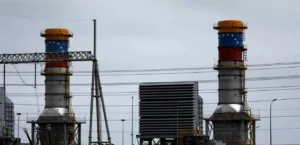
First, imposing further rationing of electricity production with the aim of reducing fuel consumption and prolonging the stock available in the corporation’s tanks as much as possible. Accordingly, the corporation intends, if the war continues, to take the operating thermal units out of service and reduce production to less than “450 megawatts” currently produced by electricity plants, which will inevitably lead to reducing the hours of electricity supply to less than “4 hours per day.”
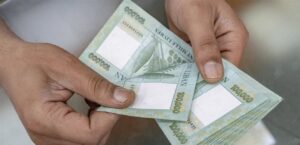
Secondly, reconsidering the current tariff for kilowatt-hours, applied since “2022”, which depends on calculating the price of the first tranche (the first “100 kilowatt-hours”) on the basis of “10 cents” and “26 cents” for each additional consumption. What is surprising about this trend is that the emergency plan drawn up during the era of former Energy Minister Walid Fayyad, on which the new tariff was based, took into account fluctuations in global oil prices, and concluded that the corporation is able to achieve profits as long as the price of a barrel of global oil is less than “$110,” which is the current situation.
According to the sources, the General Director of the Electricity Corporation, Kamal Hayek, recently visited the President of the Republic, Joseph Aoun, and informed him of this trend, which reflects the Electricity Corporation’s suffering from the lack of collections in large areas that are currently being attacked in the southern suburbs and large parts of the South Lebanon and Nabatieh governorates, which destabilizes the corporation’s financial stability and liquidity cycle.
In this context, the sources indicated that displacement did not lead to a decrease in electrical energy consumption, but rather led to the redistribution of consumption and its concentration in what are known as “safe areas,” where the displaced are densely located, which also causes unexpected malfunctions due to the dilapidated, worn-out distribution network that has been left without investment in the past period.
The sources pointed out that the Minister of Energy, Joe Al-Sadi, “is not listening”. Perhaps for this reason, Hayek was forced to visit the President of the Republic to explain the situation. The sources add that this visit also carried further goals because of the bleak picture facing the institution, so Hayek had to remove responsibility from himself and the institution. (Al Akhbar newspaper)