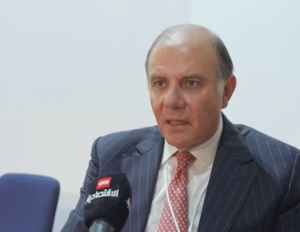
With mounting fears of a large-scale conflict in Lebanon, France has intensified its diplomatic efforts with the aim of preventing the outbreak of war, and seeking to open a new political path between Lebanon and Israel that goes beyond a mere ceasefire. According to a report prepared by journalist Tomer Almogor and published by Israeli Channel 12, the French ambassador to Israel, Frederic Gorens, revealed the details of the French initiative that Paris is seeking to present to contain the escalation.
Journes stated that France is working to push towards a broader agreement between Lebanon and Israel, which is not limited to stopping military operations, but rather aims to stabilize calm in the long term and reformulate the rules of the relationship between the two parties. The French ambassador stressed that this opportunity “does not come around often,” noting that Paris sees the possibility of reaching a political framework that transcends the stalemate that has continued since 1948.
According to the French proposal, the proposed agreement may include new security and political arrangements, including gradually integrating Hezbollah elements into the Lebanese army, in addition to providing international support to revive the faltering Lebanese economy. Jornes explained that the idea is to create the conditions that push Hezbollah to transform into a political and social movement, and gradually abandon the “resistance” approach.
The French ambassador said that the integration will not take place through the introduction of entire Hezbollah units into the Lebanese army, because that may turn the military institution into a cover for the party, but rather through a gradual process that allows its members to join as individuals on official salaries, which over time will lead to the erosion of the idea of armed action. He added that this transformation requires time and a change in mentalities.
The report indicated that the French initiative also includes an unprecedented element, which is the possibility of Lebanese recognition of Israel within the framework of the proposed agreement, which journalist Barak Ravid mentioned in previous reports. According to circulating information, the concerned parties are studying the proposal, and direct negotiations may be held in Paris if the political conditions are ripe for that.
Regarding the Israeli position, Jorness explained that the proposal aroused interest in Tel Aviv, but no official response has yet been issued. He also pointed to the presence of American interest in the initiative, and to the growing awareness among the Lebanese leadership that continuing to be satisfied with a fragile ceasefire will not be enough to maintain the stability of the country.
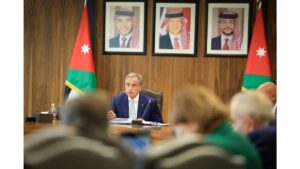
The French ambassador addressed the position of Lebanese President Joseph Aoun, who appointed a political delegation to negotiate a possible settlement with Israel, and in recent days expressed his determination to prevent escalation even if it required taking steps against Hezbollah. However, Journes acknowledged that the Lebanese state’s ability to disarm the party remains very limited.
He stressed that the president and prime minister in Lebanon cannot fully confront Hezbollah, because that could lead to a civil war, stressing that these restrictions reflect the fragility of the Lebanese state despite international and American support for it.
In parallel with political efforts, France is also using the economic pressure card to motivate Lebanon to engage in the settlement, as Journes stresses that stabilizing the Lebanese economy and restructuring its debts constitute an essential element in any long-term rescue plan. Paris also sees the need to strengthen the capabilities of the Lebanese army, which is considered relatively weak and unable to confront Hezbollah alone.
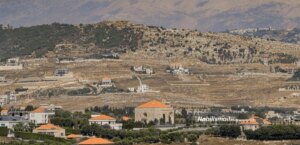
These efforts come at a time when the potential for escalation is increasing, after Hezbollah entered the war alongside Iran at the beginning of the month and launched hundreds of drones and missiles towards northern Israel, while Tel Aviv is preparing for a large military operation in Lebanon, a scenario that Paris and the Lebanese government are trying to avoid through intense diplomatic action.