:
From the support that the Vatican provided to the people of Qalaia border in the south, to the international solidarity that Beirut demonstrated with the Lebanese people, all the way to Sheikh Naim Qassem’s statement that “the battle will be long…”, in these conflicting messages is embodied the full picture of the rapid decline towards the abyss that Lebanon is witnessing, as the country is sliding towards a situation for which it is not prepared for a “long confrontation,” a confrontation for which the Secretary General of “Hezbollah” confirmed that his party is prepared.
Despite all the support, supportive positions and diplomatic moves, the war continues to rage, and warnings and evacuations continue, affecting 14% of Lebanon’s area, according to the Norwegian Refugee Council.
The Israeli raids and strikes did not stop in recent hours, but rather expanded to include areas from the south to the Bekaa and all the way to Beirut, in parallel with cutting the bridges linking the south and north of the Litani River, threatening to target infrastructure and expanding attacks to include new areas in Beirut.
In a development parallel to field events, Israeli media indicated that using Beirut as a center for managing Hezbollah’s operations made it part of the battlefield, and that the attacks would be carried out without warning in any place where the party was believed to be active, or any infrastructure that Israel accuses the party of using.
In a striking move, Israeli planes dropped paper leaflets over Beirut, carrying messages calling on the Lebanese to disarm the party, in addition to QR codes leading to links on the WhatsApp application and the Facebook platform.
The Lebanese Army warned against interacting with these links, and explained that they are affiliated with the Israeli Army’s Human Intelligence Unit known as “Unit 504,” which seeks to recruit agents and collect information. The Army Command confirmed that accessing these links may expose users to hacking their phones and accessing their personal data, in addition to serious legal and security consequences.
Politically, the Secretary-General of the United Nations, António Guterres, visited the presidential headquarters and called for an end to the fighting between Israel and Hezbollah, considering that “the time of armed groups has passed, and this is the time of strong countries that monopolize the use of force.”
President Joseph Aoun stated to Guterres that “Lebanon has been dragged into a war that is not ours,” stressing that he had not received a response to his initiative to negotiate.
On the diplomatic level, the Lebanese Ministry of Foreign Affairs informed the Iranian Chargé d’Affaires in Beirut, Tawfiq Safadi, of Lebanon’s rejection of the statements issued by the Iranian Embassy and Tehran’s representative to the United Nations regarding Iranians killed in targeting a hotel in Hazmieh.
The Foreign Ministry confirmed that these people did not have diplomatic status as Tehran claimed, stressing its rejection of any interference in Lebanese internal affairs, and demanding official written responses to the points raised.
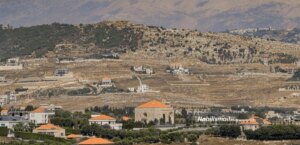
The Apostolic Nuncio to Lebanon, Bishop Paolo Borgia, toured a number of Christian villages in the districts of Marjayoun and Hasbaya, including Dermimas, Qulaya, Jdeidet Marjayoun, Ebel al-Saqi, Rashaya al-Fakhar, and Kawkaba.
During the tour, Borgia affirmed the church’s solidarity with the residents of these areas, and praised the people’s steadfastness in their land despite the difficult circumstances, stressing that moral support must include all the people of the region without exception.
Economically, Prime Minister Nawaf Salam discussed with the Governor of the Bank of Lebanon, Karim Said, the financial repercussions of the war. The Governor confirmed taking a series of precautionary measures aimed at maintaining the stability of the financial and monetary system, and ensuring the continuation of liquidity in the banking sector despite the exceptional circumstances.