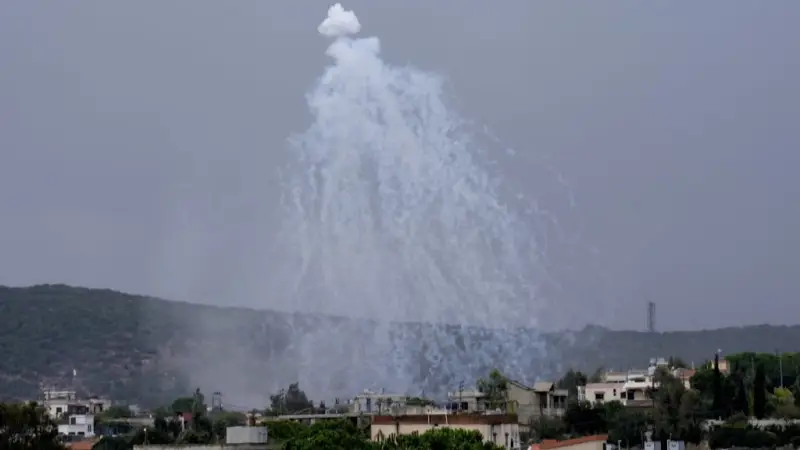
The conversation came again about White phosphorus After Human Rights Watch accused Israel of using it in attacks on the town of Yahmar in southern Lebanon on March 3, in the midst of the war with Hezbollah.
The human rights organization’s report stated that Israeli forces used white phosphorus shells in artillery shelling that targeted the town’s homes on March 3.
She pointed out that analysis of verified photos and videos showed the explosions of these shells over a residential area, leading to fires in homes and cars.
What is white phosphorus?
White phosphorus is a highly flammable chemical that ignites as soon as it is exposed to oxygen in the air. Its ignition produces thick smoke and high heat.
The most prominent uses of this deadly substance in armies include the following:
- Creating a smokescreen to hide troop movements.
- Battlefield lighting during night operations.
However, the use of these shells as incendiary weapons raises widespread criticism because of the great dangers they could pose to civilians.
What is the effect of white phosphorus on humans?
Experts and human rights organizations warn that exposure to white phosphorus may cause serious health harm, including:
Deep and severe burns in which the substance sticks to the skin and continues to burn as long as it is exposed to oxygen, tissue and bone damage as a result of high heat, in addition to severe respiratory problems when inhaling the resulting smoke, in addition to damage to internal organs such as the liver and kidneys.
Exposure to white phosphorus may also lead to death in severe cases as a result of burns or poisoning.
The material can ignite again if its remains are exposed to air again, making it more difficult to treat resulting injuries.
Although the military use of white phosphorus is permitted in some cases, such as camouflage or illumination, its use in residential areas raises sharp criticism from human rights organizations, due to the great danger it poses and the possibility of causing fatal burns and large-scale fires.