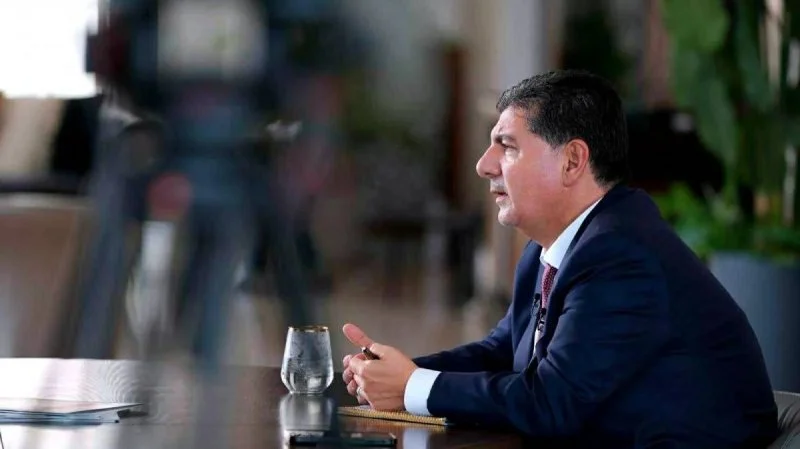
Businessman Bahaa Hariri wrote through his account on the “X” platform that it is no longer possible to hide behind the slogans of “wisdom” and “protecting stability” in light of the targeting of Arab countries in the Gulf and the Middle East by Iran, stressing that Lebanon was forced to be a hostage of this situation.
He explained that the events revealed, as he said, what had been covered up for many years. The party that established itself as an internal authority and permanent guardian of balance in the regime, and monopolized settlements in its name, did not commit to neutrality or mediation, but rather provided political cover for a weapon outside the authority of the state, and established a strategic choice that made Lebanon subordinate to an axis that is clashing directly with the Arab countries today.
He believed that the arrival of the fire to Arab capitals undermines the claim that this path was aimed at protecting Lebanon, pointing out that silence is not wisdom but complicity, and that the justification is not realistic but rather legitimizing hegemony that linked the national decision to a project that attacks the Arab depth.
He added that whoever presented himself for years as the manager of internal balances, and responsible for stability inside and outside state institutions, was providing the cover to transform Lebanon into a platform of influence, which led to political dependency that places the country today in confrontation with an environment that has historically embraced it.
He continued that history will record that whoever monopolized the role of “internal guarantor” did not protect the state, but rather protected weapons at its expense, and that whoever presented himself as a fundamental pillar in the governance equation gave legitimacy to the path of putting Lebanon in a position hostile to its brothers at a time when they were being targeted.
He concluded by saying that it is no longer possible to hide, stressing that those who have long held the strings of balance in the regime bear responsibility for the isolation and dangers that this choice brought to Lebanon and its fraternal relations with the Arabs, and that the role of the “guarantor” will be understood today as a biased political choice and not as national neutrality.