Nader Hegaz – MTV
Lebanon stands at a fateful crossroads, in light of regional security and political developments, in conjunction with huge economic plans, one of which is the IMEC corridor, or the Indian Corridor, which came to fruition at the G20 summit in 2023. It is a major project linking India to Europe via the Middle East, and so far includes the United States of America, the Emirates, India, Saudi Arabia, France, Germany, Italy and the European Union.
This project would not have passed through Beirut, but a surprise visit by French President Emmanuel Macron’s special envoy to the project, Gerard Mestralier, to Lebanon, coinciding with the visit of the Indian Prime Minister to Tel Aviv, may lead Lebanon to be part of it… So how can Lebanon benefit from the India corridor?
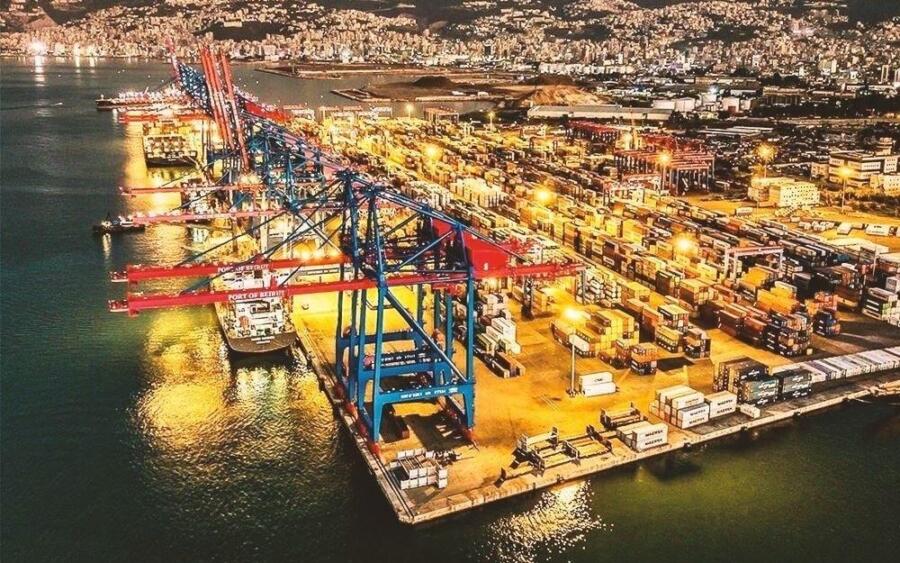
Economic expert and member of the Economic and Social Council, Anis Bou Diab, in an interview with MTV, points out, “Lebanon is not yet a partner in this project, and it can be a service provider. But it is better for us to be partners, and there is interest in that, given that it possesses the most important natural ports on the shore of the Mediterranean. The natural depth of the ports of Beirut and Tripoli allows them to receive the largest shipping ships, and thus they can be basic transit and distribution points between the Middle East and the Mediterranean countries.”
Abu Diab lists the most important sectors through which Lebanon can benefit, the most important of which are:
– Expanding and enhancing its role in terms of storing goods and services, and through multimodal transport. Lebanon can benefit from this workshop in infrastructure to improve its roads and ports, such as the road linking Beirut to the Bekaa through the Matn and reaching the border. Saudi Arabia is 48 hours away from Lebanon by land via Jordan, and Lebanon has historically played the role of “transit” to Arab countries, and thus it is able to attract international companies and international transport companies for investment.
-Transforming into a regional center for digital logistics services, and benefiting from the very high human competency it has in the field of digital transformation and technological revolution. But this requires infrastructure to which partner companies in this corridor can contribute.
-Benefiting from clean energy projects such as green hydrogen, solar energy and wind energy.
Exporting goods, especially agricultural and food, that are highly competitive in European markets.
– Transforming into a tourist attraction, as facilitating traffic between the partner countries in this project increases the possibility of Lebanon accommodating tourists and exchanging tourism services.
– Taking advantage of its location on this corridor as a center for science and medicine and providing professional and health services.
It is noteworthy that this project is based on two corridors, an eastern corridor linking India with Saudi Arabia and the Emirates, and a northern corridor that includes railway lines passing through the Gulf states, reaching the western ports in European countries. Israel is an essential station there.
In this context, Abu Dhiab points out that “Israel is not a partner as a founder of the project, and therefore Haifa Port is not a partner to date. Rather, it was mentioned as a service provider, but it is of course expected to be part of it after the signing of the Abrahamic Accords.”
This description makes Haifa Port a competitor to Beirut Port, but Abu Dhiab confirms that Lebanon’s ports are much better logistically and technically, but they need infrastructure development.
This ambitious project aims to create a wide network of very large transport and logistics lines linking India to Europe via the Middle East, through the development of sea ports, railway and land networks.
It needs areas that are considered advanced logistical platforms, especially since it later includes laying pipelines to transport clean hydrogen in order to develop clean energy, according to Abu Dhiyab. It aims to enhance digital communication, and after linking these countries to each other, global supply baskets will be established at a 40 percent lower cost between Asia and Europe than traditional methods. One of its most important benefits is reducing the duration and cost of shipping between Asia and Europe, and reducing the risks associated with shipping via long sea routes, which constitutes a significant incentive for investments, and this explains the French desire to invest in infrastructure, especially ports, including the ports of Lebanon.
Will Lebanon ride the new regional train?