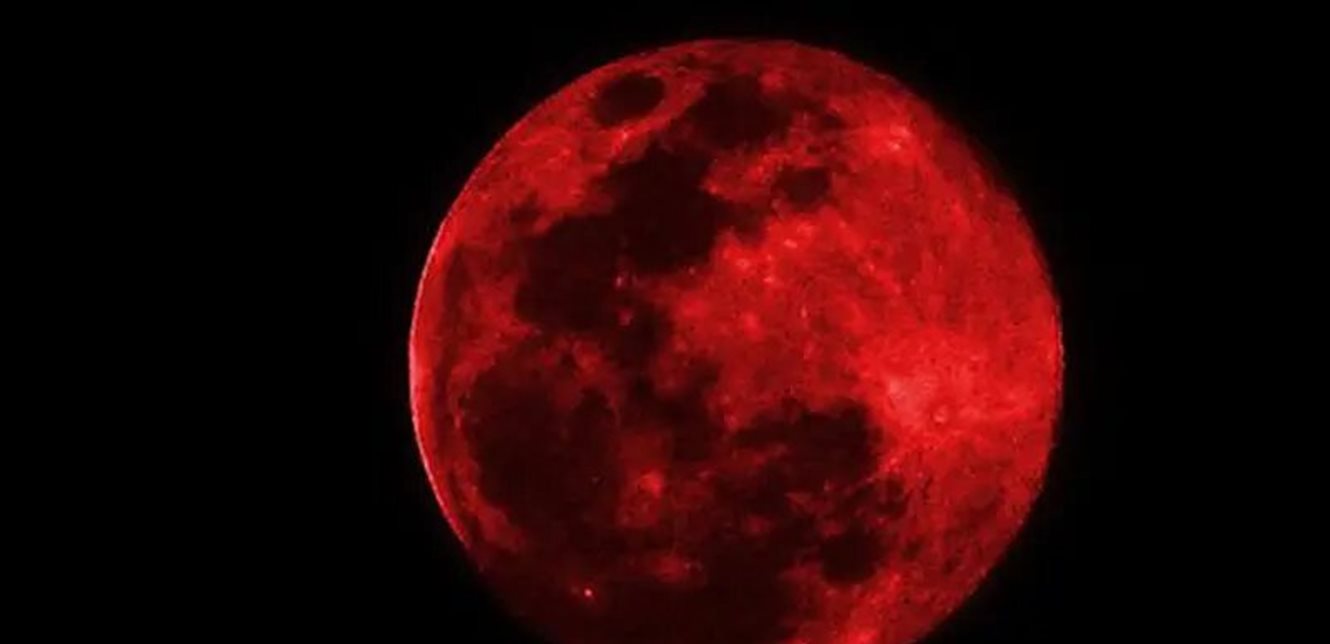
Astronomers are preparing to witness a total lunar eclipse that will occur soon, specifically on March 3. This event is considered the first total lunar eclipse in 2026, and we will not witness a similar event until 2029.
A lunar eclipse occurs when the Earth is in a straight line between the Sun and the Moon, casting its shadow on the Moon’s surface.
This alignment only occurs during the full moon phase, blocking direct sunlight, causing the moon to appear pale or turn a bright red color, often known as a “blood moon.”
Unlike a solar eclipse, a lunar eclipse can be safely viewed with the naked eye and is viewed from anywhere on the dark side of the Earth. The eclipse lasts for hours, while the total eclipse phase, which is the phase of complete shadow, usually lasts about two hours.
Total lunar eclipse: According to what was published by the “Economic Times” website, the total lunar eclipse is expected to be seen briefly on March 3 from the dark side of the Earth. Unlike a partial solar eclipse, a lunar eclipse is clearly visible to anyone facing the moon, because the Earth lies between the sun and the moon’s surface, casting its shadow on it.
NASA indicates that this total phase takes about 59 minutes.
The secret of the red color: When the eclipse reaches its peak, the color of the moon turns to a bright red color known as the “blood moon” due to a phenomenon known as “Rayleigh scattering,” named after the British physicist John William Rayleigh. This is a process in which the Earth’s atmosphere filters sunlight, converting the longer red wavelengths to illuminate the shadowed moon.