– Walid Khoury”
Despite President Joseph Aoun’s repeated assurances to his visitors, especially the representatives he receives daily, that the parliamentary elections will be held on the scheduled date, data is increasing significantly in political circles, indicating that the postponement of this entitlement has become closer than its implementation, in light of growing external pressure.
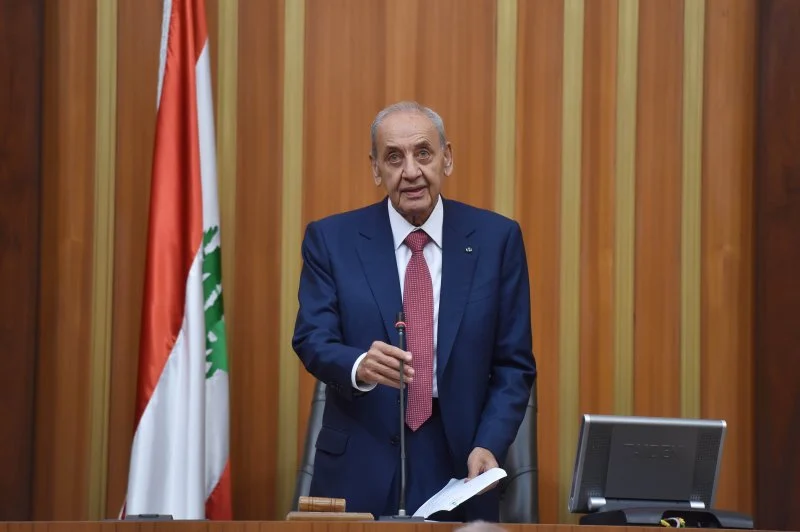
In this context, information indicates that a diplomatic atmosphere has prevailed in recent days, reported by more than one ambassador, clearly speaking about support for postponing the elections, which is what Parliament Speaker Nabih Berri implicitly indicated in his recent interview with Asharq Al-Awsat newspaper, where he pointed out that some ambassadors are now explicitly declaring their position calling for postponement.
Information confirms that nomination applications will continue to be submitted in the coming period, by influential parliamentary blocs, led by the Free Patriotic Movement. However, this does not necessarily represent a conclusive indication that the elections will be held on their constitutional date, given the continuing political differences and escalating pressures in multiple directions.
According to sources close to Berri, the battle that he is waging today “with all his might” is no longer limited to ensuring the holding of elections, but rather it also aims to protect the powers of the House of Representatives from any infringement or circumvention, in direct reference to what it considers “attempts to subvert the role of the House” through alternative bodies or consultations that are made mandatory and exceed their legal limits.
The sources point out that the crisis has gone beyond the electoral dimension to reach the heart of the constitutional balance, pointing to what they describe as “the confiscation of the legislative authority’s decision” by advisory bodies, such as the Legislation and Issues Authority, which issued a consultation according to which it actually amended an effective law, even though the Council discussed the issue at length and did not make any amendment to it. Berri’s circles consider that this matter represents a dangerous precedent that affects the Council’s status and legislative role.
The sources go further, considering that part of the push for postponement is linked to a political attempt aimed at “breaking the duo” by changing the rules of the game outside the ballot boxes, after this was not possible inside them. It indicates that some ambassadors opposed to holding elections, in light of the lack of guaranteed results that show a real change in the balance of power within the new council, especially with regard to the possibility of achieving a major breakthrough in the “duo” environment, are inclined to the option of extension as it is a safer formula from a political standpoint.
Berri’s circles stress that any postponement, if it occurs, cannot be a pretext for reducing the role of the Council or adjusting the balances through top-down decisions, considering that the confrontation today is not only about the date of the elections, but is also related to the nature of the regime and the powers of its institutions.
Between the official confirmation of holding elections, and the escalation of adverse political and diplomatic indicators, this entitlement faces a double test: the test of respecting constitutional deadlines, and the test of protecting the powers of the Parliament in the face of any attempt to circumvent or break politically under the guise of postponement.