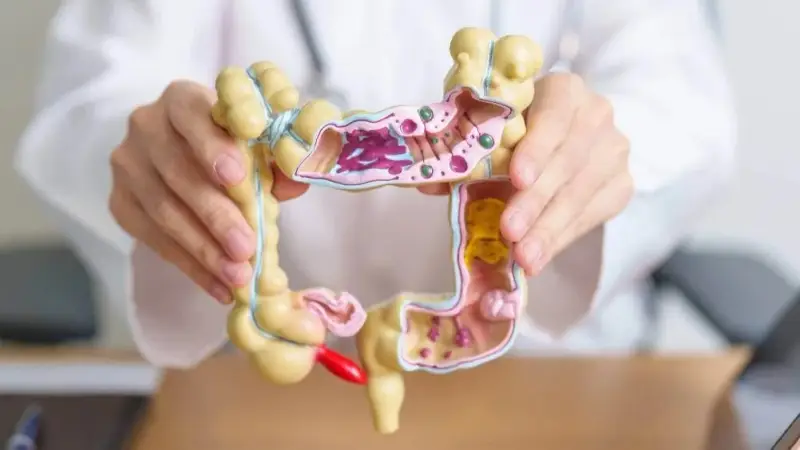
A research team from South Korea has discovered that blocking the action of a certain protein inside cells may significantly slow the growth of colorectal cancer.
The study, published in the journal Nucleic Acids Research, showed that disabling a gene called “NSMF,” which is responsible for producing a protein that helps cancer cells adapt to rapid division, leads to what they described as “irreversible cellular senescence” in tumors, according to the Emirates News Agency.
Cancer cells usually divide rapidly, and the “NSMF” protein stimulates DNA damage and the emergence of new mutations. But turning off this gene in laboratory experiments and on mice led to slowing tumor growth or stopping it completely.
In one experiment on mice, inhibiting “NSMF” led to a significant decrease in the growth of intestinal tumors, and the average lifespan of the animals increased by 33.5% compared to mice in which this gene was not disabled. Scientists did not observe any damage to healthy intestinal cells, suggesting that this method targets tumors without harming normal cells, unlike traditional chemotherapy.
Scientists believe these results represent a promising step towards developing new treatments that increase the chances of survival, although more studies in humans are needed.
Dr. Kyung-Jin Shin, a cancer expert at the Ulsan National Institute of Science and Technology (UNIST) who led the study, said that the results indicate that NSMF is a promising target, as by inducing a permanent senescence state in cancer cells, it can effectively stop tumor growth without harming healthy tissue.
He added that developing drugs to block this protein “may provide a new therapeutic approach against cancer.”
These results come in light of the sharp rise witnessed in colorectal cancer among young people. Cases among Americans under 50 have nearly doubled since the mid-1990s, and many experience mild symptoms that are often overlooked or misdiagnosed.